
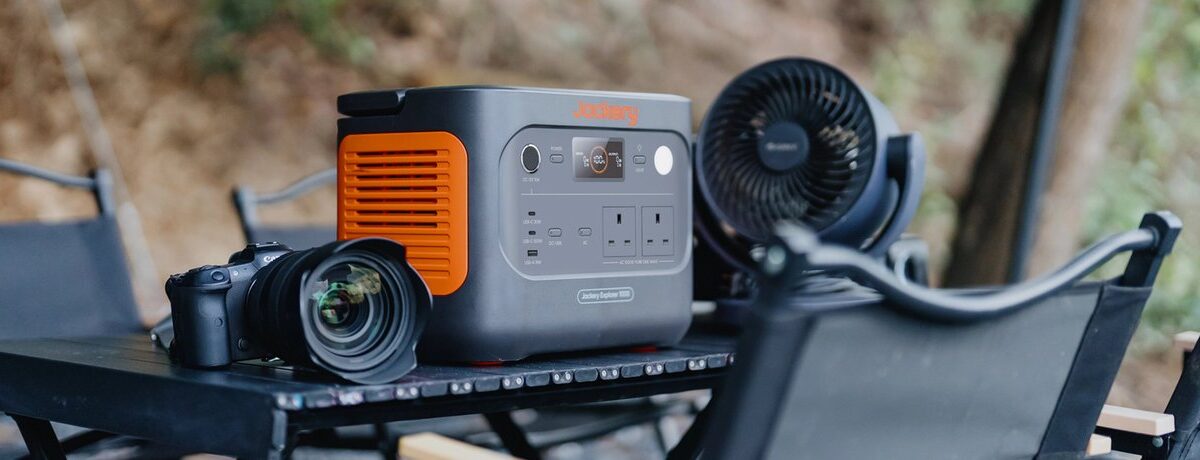


A considered introduction to Jackery’s portable power roots, its Explorer and SolarSaga families, and the questions worth asking before choosing a setup.
Portable power has moved from a specialist camping accessory into a practical part of how people plan trips, work outdoors and prepare for interruptions at home. Jackery has built its UK range around that overlap: compact power stations for mobile use, larger units for more demanding loads, and solar panels that can recharge compatible stations.
For a first-time reader, the useful question is less whether the brand has a product for every situation and more how its range is organised. The Explorer name covers the power stations, while SolarSaga identifies the foldable solar panels. We have used Jackery’s UK product information to explain the range and the details that deserve a closer look.
Some links in this article are affiliate links: if you make a purchase through them, we may receive a small commission.
Highlights
- Jackery focuses on portable power stations and compatible solar charging for outdoor use and home backup.
- The Explorer range runs from the compact Explorer 240 v2 to the larger Explorer 2000 v2.
- The Explorer 1000 v2 is listed with 1070Wh capacity, 1500W output and LiFePO4 battery technology.
- SolarSaga panels add a renewable charging route, with real-world output depending on sunlight, setup and compatibility.
- Capacity, output, portability and included accessories are the useful comparison points; check current product pages for full details.
A brand built around portable power
Jackery presents itself through a clear product idea: electricity that can travel with the user. The UK store is organised around power stations and solar generators, with panels and bundles extending the core products. That focus gives the range a recognisable logic. A customer can start with the amount of stored energy and output they need, then decide whether solar charging or a particular bundle belongs in the setup.
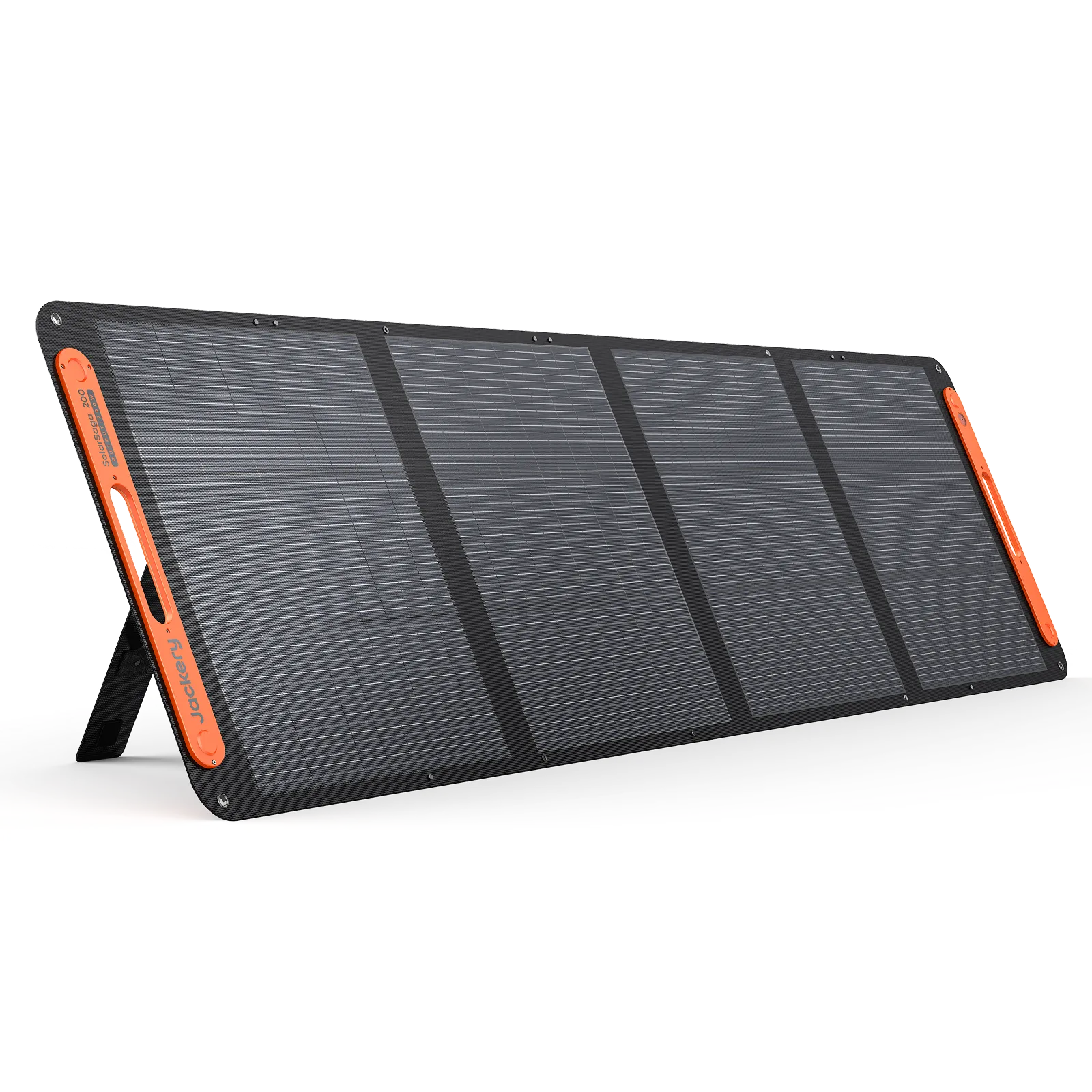
This is a useful distinction for anyone new to the category. A power station stores energy and supplies it through its output ports; a solar panel generates power when conditions allow, but does not store it. Jackery’s SolarSaga 200W Solar Panel is therefore best understood as part of a system, paired with a compatible Explorer station rather than as a standalone backup source.

The brand’s stated features also reveal its priorities. Some Explorer v2 models use LiFePO4 batteries, and selected units list app functions, fast charging modes and an uninterruptible power supply feature. Those are product-specific details rather than guarantees shared by every model, so check the exact specification page before treating one feature as a range-wide promise.
That product-led approach is straightforward, but it places a little responsibility on the buyer. Terms such as capacity and output answer different questions. Capacity describes stored energy, while output concerns the load a station can support. Neither alone tells you how long a device will run: its draw, conversion losses and operating conditions also matter.
Three parts of the range, three different jobs
Looking across different parts of the catalogue is a helpful way to understand the brand’s intended breadth. These examples are not a ranking; they show how size, capacity and solar options change the decision.
1. Explorer 240 v2 keeps the brief compact
The Explorer 240 v2 Portable Power Station represents the lighter end of the Explorer identity. Its compact positioning makes it relevant to readers who need charging for smaller electronics or want a station that is easier to carry and store. It is a sensible entry point to the category when portability is central and the planned loads are modest.
The trade-off is inherent in a compact model: it has less stored energy and output headroom than the larger units. A first-time buyer should list the devices they actually want to run, note their wattage, and check the product page for capacity, ports and any limits. A phone and camera kit make a different brief from a kettle, cooler or backup plan for several household devices.
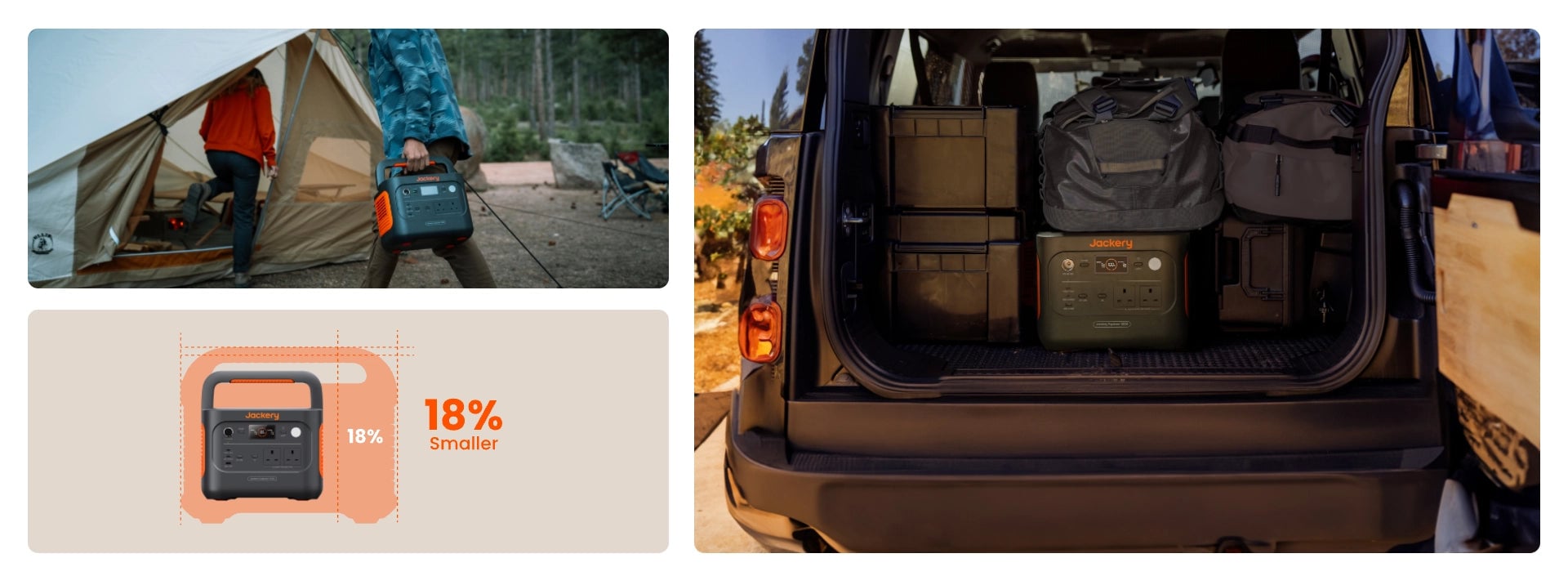
For that reason, compactness should be a deliberate choice, rather than shorthand for value. Readers comparing the Explorer 240 v2 with its bigger siblings should consider how often they can recharge, what equipment will be connected at the same time and how much reserve they want. Jackery makes model pages available for those checks, including the compact Explorer option. The Explorer 240 v2 specifications are worth reading alongside your device list.
2. Explorer 1000 v2 makes the range’s balance visible
The Explorer 1000 v2 Portable Power Station is one of the clearest examples of Jackery’s central proposition. Its UK listing gives a capacity of 1070Wh and a 1500W output, and describes a LiFePO4 battery, app-enabled emergency charging and quiet charging mode. Together those details point to a model for more than topping up personal devices, while retaining a portable format.
It is also where a spec sheet needs context. A stated output ceiling does not mean every appliance is suitable, and runtime estimates depend on actual consumption. The brand’s listing should be read alongside the appliance label, especially for devices with a high start-up demand. Buyers who want backup for a home office may also want to confirm which outlets are included and whether the listed UPS behaviour matches their equipment needs.
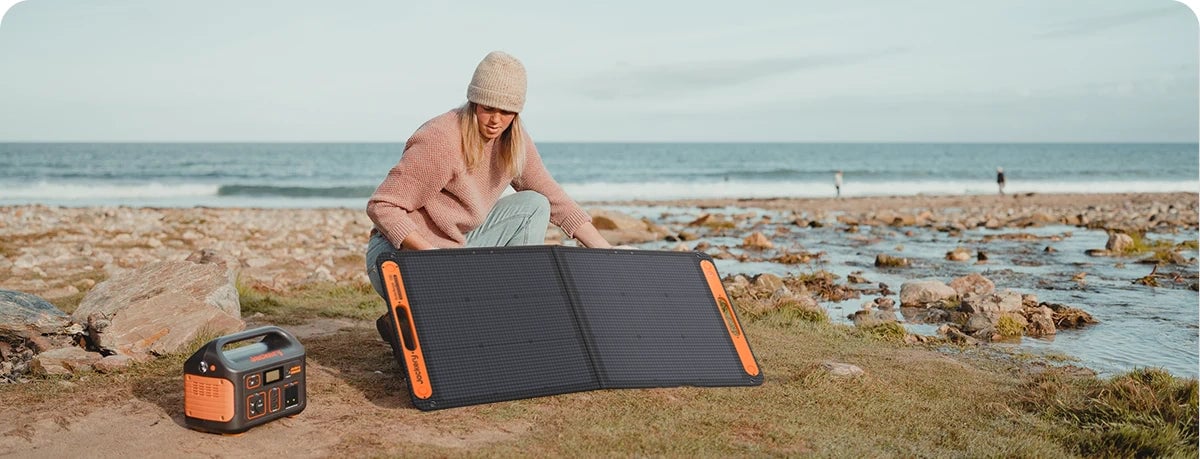
Solar charging changes the planning question rather than removing it. The Explorer 1000 v2 can be paired with compatible SolarSaga panels, including the SolarSaga 200W panel, but charging speed varies with weather, shade, panel angle and season. The UK site lists configurations with different panel combinations; confirm what a bundle includes and whether its connector and charging limits suit the station. Readers can also review the panel details before choosing a pairing. That is more useful than assuming a panel’s headline wattage will be available throughout a day outside.
For a first introduction, this model shows why Jackery’s range is not simply a set of differently sized batteries. The offer combines capacity with charging choices and controls, while the practical decision still depends on the user’s devices and environment. The Explorer 1000 v2 product page is the place to verify current specifications and variants.
3. Explorer 2000 v2 addresses heavier demands
At the larger end, the Explorer 2000 v2 Portable Power Station signals a different use case: greater stored energy for more demanding outdoor setups or selected home-backup tasks. Jackery’s UK listing states 2042Wh capacity and 2200W output. It also describes LiFePO4 chemistry and multiple charging modes. These are substantial specifications, but suitability still depends on the loads, starting surges and length of backup a household expects.
A larger station brings practical considerations of its own. Buyers should think about where it will sit, how often it needs moving, and how it will be recharged between uses. It may be excessive for a weekend of phones and lights; it may be more aligned with a plan involving several appliances. For mobile trips, vehicle space and the ease of loading matter just as much as the capacity figure.
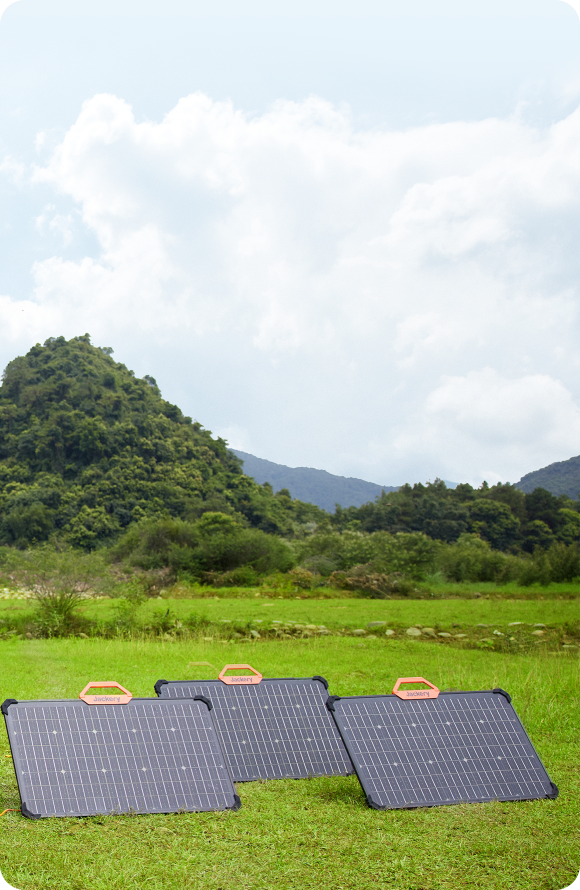
SolarSaga rounds out the story because it allows the customer to build a charging setup around a station. The SolarSaga panel listing describes foldable designs and weather-related specifications such as water resistance on selected models. Panel weight, unfolded footprint and connector compatibility should all be checked. A higher output panel can be attractive, but it only helps if it suits the station and the user has room and sunlight to deploy it.
The SolarSaga 200W Solar Panel listing describes a foldable panel with a carrying format and compatibility aimed at Explorer stations. Check the specific pairing guidance before combining products. Solar generation is variable, so it should be treated as an option that can extend flexibility, not a promise of uninterrupted power under every condition.
A practical way to read the catalogue
Rather than begin with the biggest number, start with a short inventory. This keeps the brand’s many models in perspective and makes product pages easier to compare:
- List the devices you expect to power and note their rated and start-up wattage where relevant.
- Estimate the duration you need between charges, then compare that use with the station’s stated capacity.
- Choose portability needs realistically, including storage, carrying and transport.
- Decide on solar after checking compatible panels, cable requirements and likely conditions.
- Review the exact bundle for included accessories, warranty terms and current availability on the UK store.
This is also where Jackery’s range has a clear strength: the names and families make it relatively easy to understand the broad ladder from compact Explorer products to higher-capacity stations, with SolarSaga as the panel family. But broad category logic cannot answer every buyer’s question. Detailed runtime depends on the connected equipment, and a product page’s examples should not be mistaken for a universal promise.
Where Jackery’s range is clear
- The Explorer and SolarSaga families give the catalogue a legible structure.
- Several capacity tiers help readers match a station to smaller or heavier loads.
- Selected models list useful features such as LiFePO4 batteries, app functions and solar charging.
- The storefront provides product specifications and bundle information in one place, including the Explorer 1000 v2 page.
What still needs a careful check
- Capacity and output are not interchangeable; check both against your appliances.
- Solar performance varies with weather, placement, shading and season.
- Accessories, included panels and features can differ across model versions and bundles.
- Size and weight become more noticeable as you move up the capacity range.
Is Jackery worth a closer look for a first-time buyer?
Yes, if you want a portable power system with a recognisable range of stations and optional solar charging. Jackery’s UK catalogue makes the broad choices understandable, and models such as the Explorer 1000 v2 and Explorer 2000 v2 show how capacity and output shift for different plans.
The honest limitation is that a brand overview cannot select a station for your household or trip without a device list and realistic runtime estimate. We recommend using the range as a starting framework, then checking the specifications, accessory list and compatibility notes for the exact UK product. That small bit of planning will matter more than choosing a model by its name alone.
If Jackery’s mix of Explorer stations and SolarSaga panels fits that plan, the UK collection is the sensible next stop for current model details and availability.
