



A research-led look at Jackery’s Explorer 240 v2, 500 v2 and 1000 v2, with the use cases they suit and the product details worth checking.
Portable power stations are easy to compare by model name and harder to compare by actual need. The useful question is whether a unit can support the devices you plan to take, for the length of time you need, without becoming awkward to transport. Jackery’s UK store covers a spread of Explorer models and solar generator bundles, so there is a meaningful range to assess rather than one product that suits every trip.
We reviewed the information available on Jackery’s UK product pages. The range’s strengths are choice, solar charging options and clear use cases across outdoor and selected backup scenarios. Its limitation is that a general model name or lifestyle image cannot answer the detailed load and runtime questions each buyer has to check.
Some links in this article are affiliate links: if you make a purchase through them, we may receive a small commission.
Highlights
- Explorer 240 v2 is the compact entry point in this selection for lighter portable-power needs.
- Explorer 500 v2 sits between the smaller 240 v2 and larger 1000 v2 for mixed outdoor or selected backup use.
- Explorer 1000 v2 is the higher-capacity direction to investigate when longer use matters more than compact carrying.
- SolarSaga compatibility, battery chemistry, app features and bundle contents vary by listing and should be checked on the UK product page.
Across its UK range, Jackery sells portable power stations and solar generator bundles, with compatible SolarSaga panels as a route to solar charging. The brand also says that selected Explorer v2 models use LiFePO4 batteries and that rapid recharge and app features appear on selected products. Those qualifications matter: these are range-level points, not a guarantee that every feature belongs to every station.
For a buyer, the strongest case is flexibility. You can start with a compact unit for a weekend outdoors, move up for more equipment or a longer stay, and consider a compatible panel where access to mains charging is limited. The obvious trade-off is that more capacity usually means a larger and heavier station. The UK product pages are the right place to compare the exact configuration, current price and included accessories before you decide.
Before comparing models, write down the devices you actually expect to power. Separate essentials from nice-to-haves, note which need mains-style outputs or USB charging, and consider whether several may run at once. This gives you a more useful shortlist than choosing by a photo or by the number in a product name. Compare the 240 v2 details, 500 v2 details and 1000 v2 details.
- List each device and its power requirement from its own label or manual.
- Estimate how long each needs to run, allowing for real use rather than a best-case assumption.
- Check the station’s output types and limits against that list.
- Decide whether solar charging or a bundle with a panel is relevant to your trip.
1. Explorer 240 v2 suits lighter packing priorities
The Explorer 240 v2 Portable Power Station is the compact option among the three specific models considered here. That makes it the logical first page to inspect if your priority is portable power for a small set of devices, rather than trying to run a broad collection of equipment. Its product image and naming suggest an outdoor-friendly format, but neither tells you whether your own devices fit its limits.
Jackery also shows the 240 v2 in a solar generator context with a compatible panel. That may appeal to campers who want to consider solar input, though buyers should verify whether a chosen listing is the station alone or a bundle. Check panel compatibility, output details, charging times and the precise items included on the UK Explorer 240 v2 listing. The main appeal is portability; the limitation is less headroom for larger loads or longer use.
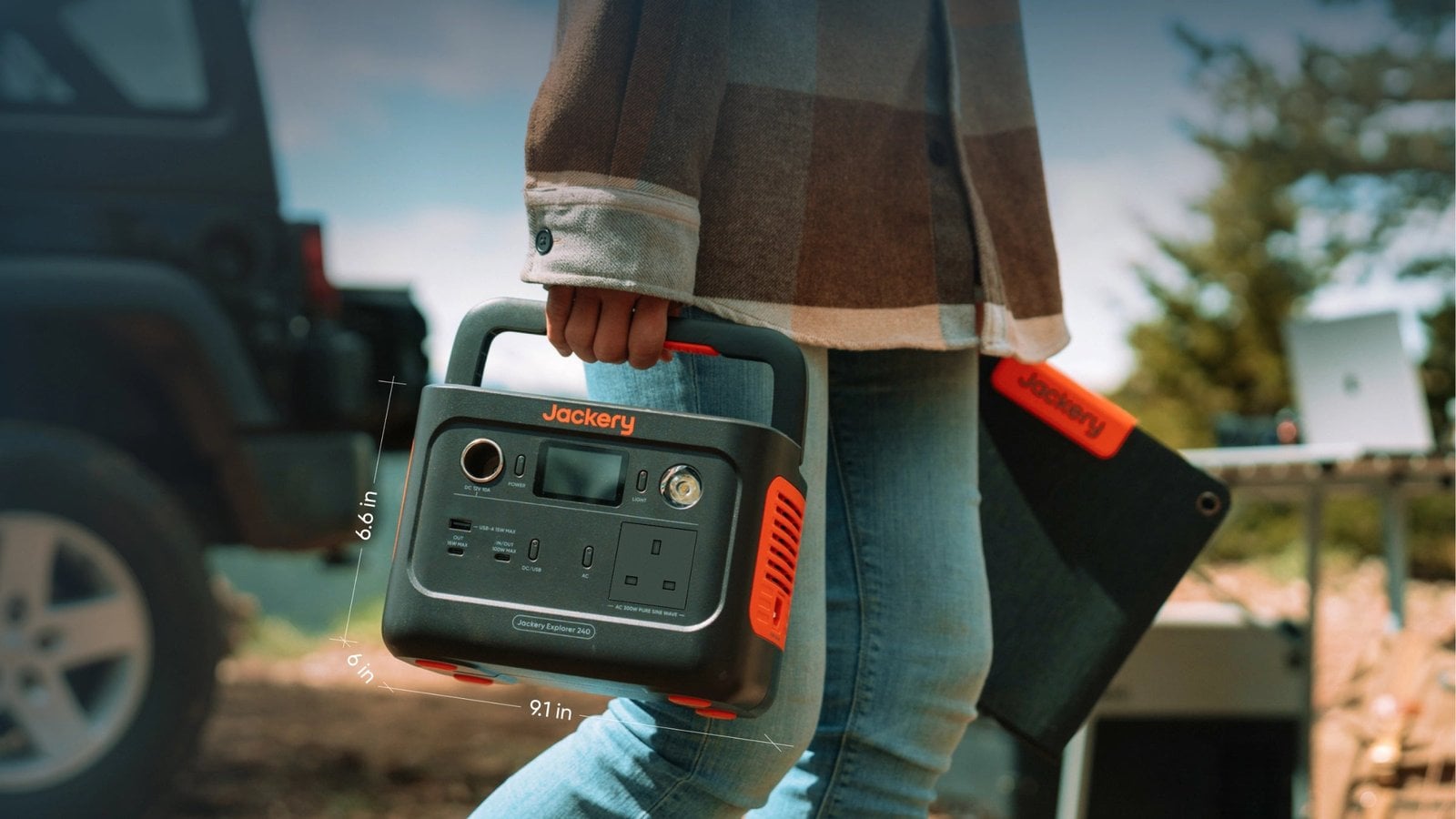
For occasional phone, camera or small-device charging, this class of product may be more proportionate than carrying a larger station. If your list includes multiple high-draw devices, however, the smaller form factor is not a reason to assume it will cope. Match the listed output and capacity to the devices themselves, and check how the manufacturer describes runtime rather than expecting a generic figure to cover every setup. See the 240 v2 specification.
2. Explorer 500 v2 balances the range for mixed use
The Explorer 500 v2 Portable Power Station is the middle option in this trio. It is the natural model to investigate if the 240 v2 seems too limited for the planned kit but the 1000 v2 feels like more station than the trip requires. Jackery’s UK imagery associates the 500 v2 with camping, fishing and office backup, giving a sense of the intended range of scenarios without proving a particular runtime.
That breadth is useful, but it is also where the specification check becomes essential. A campsite scene might involve only a few small devices; backup at a desk could mean a different combination and duration. Read the output information, charging options and any stated battery details on the Explorer 500 v2 product page. Look for a station-only listing versus a solar bundle, then compare those contents with your use plan. Confirm the listed configuration.

For many readers this is the most balanced starting point because it sits between an ultralight setup and a larger capacity choice. Still, that middle position is not a universal recommendation. If weight is the deciding factor, a smaller unit may be easier to bring along. If the use case involves longer periods or more devices, check whether moving to the Explorer 1000 v2 better fits the numbers. Compare the 500 v2 listing too.
3. Explorer 1000 v2 puts more emphasis on capacity
The Explorer 1000 v2 Portable Power Station is the largest named option in this review. It is the model to examine when a smaller station’s limits appear likely to constrain a longer stay or a more demanding mix of devices. Jackery shows it for outdoor camping, which helps place the product in context, but images cannot establish what it will power in an individual setup.
A larger station asks for a larger commitment in carrying space and weight. That can be a fair exchange for the right user, but not for someone who mainly wants to keep a phone and camera topped up. Study the page for the exact capacity, output specifications, charging methods and accessories included in the selected configuration. Readers comparing it with the Explorer 500 v2 should focus on those details and their own device list, rather than assuming the larger model is automatically better value. Review the 1000 v2 page.
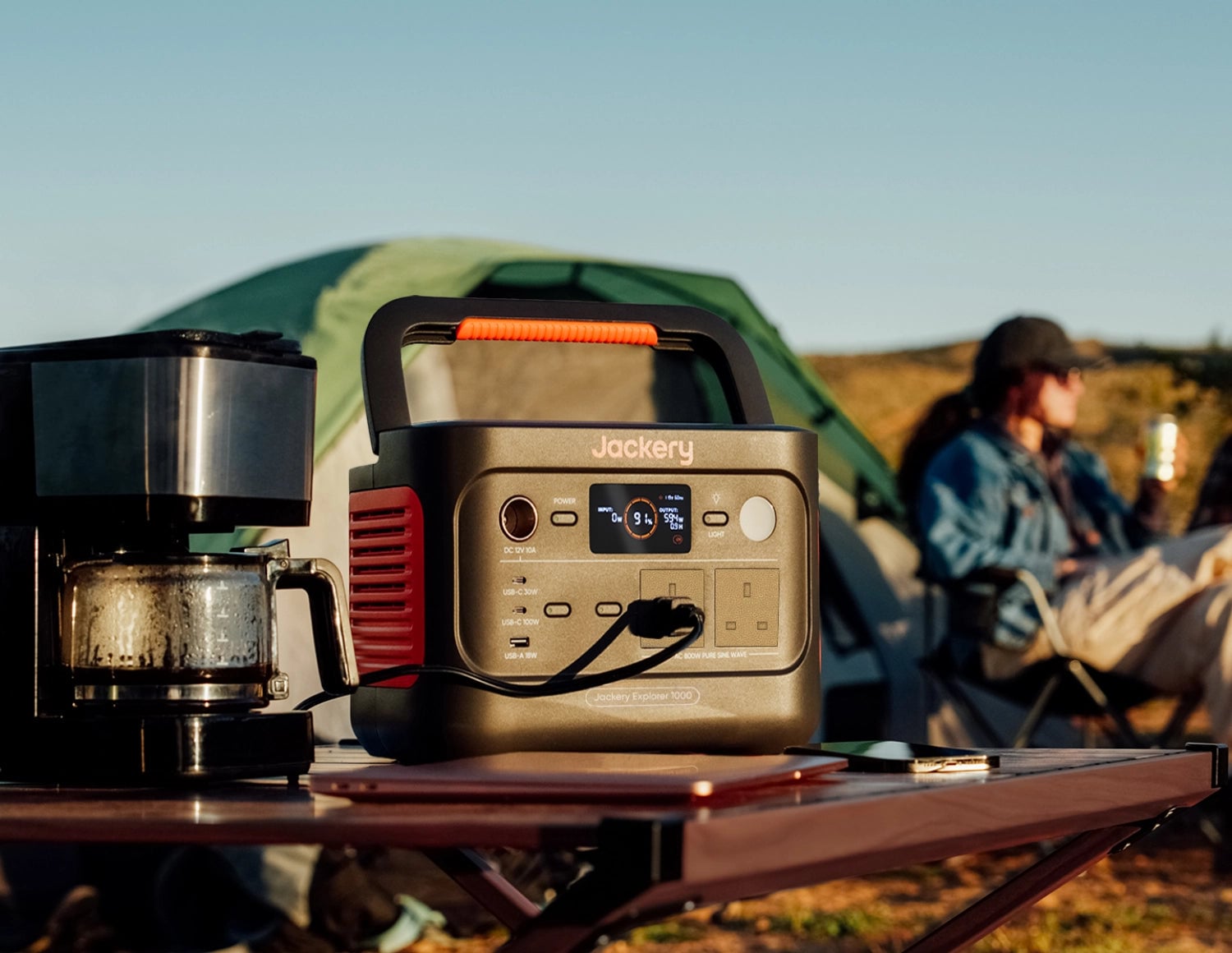
There is also a difference between buying a station and buying a solar generator bundle. A bundle can combine a power station with a compatible panel, but the available contents can differ by listing. Confirm the included equipment and the panel’s compatibility before treating a bundle as a complete off-grid solution. On the UK Explorer 1000 v2 page, use the configuration details as part of the decision, not as a footnote.
Where Jackery earns its place
- Useful model spread: the 240 v2, 500 v2 and 1000 v2 give buyers distinct points to compare by portability and intended load.
- Solar path: compatible SolarSaga panels and solar generator bundles provide an option beyond mains charging.
- Multiple settings: the UK store presents models for camping and other outdoor activities, with selected backup use cases too.
- Feature choices: selected models add LiFePO4 batteries, rapid recharge or app features, according to the brand.
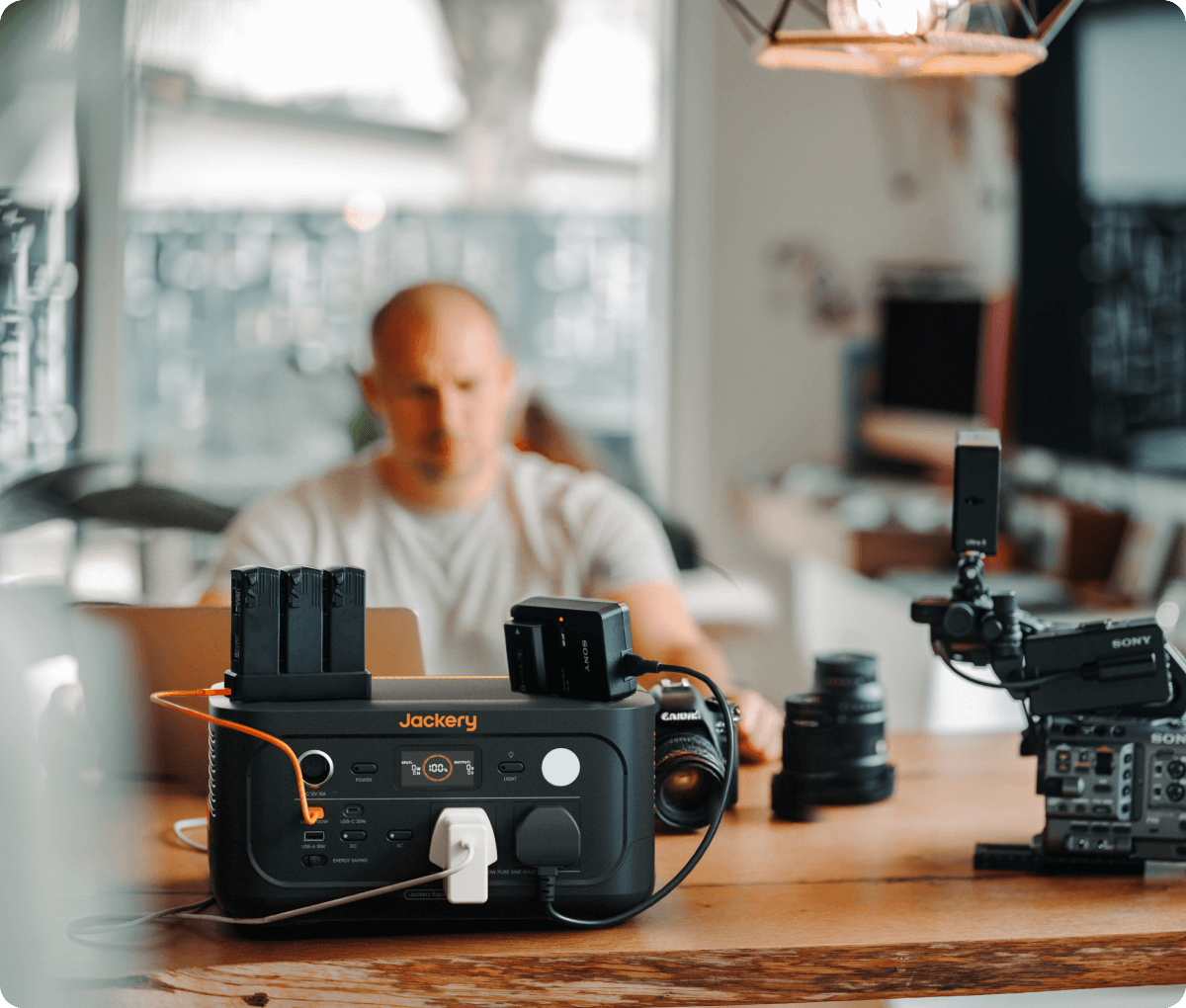
That is a solid foundation for a range review: a buyer can narrow the choice by scale, then decide if solar charging or additional features matter. The store’s range-level positioning also gives beginners a way into the category. The 240 v2 listing, 500 v2 listing and 1000 v2 listing are the comparison points we would use first.
Where the product pages leave work to do
- Capacity alone does not reveal how long a chosen set of devices will run.
- Selected features are not present across every Explorer model, so check the exact specification.
- Bundles and station-only configurations may differ in what arrives in the box.
- Solar input depends on compatible equipment and conditions; it is not a substitute for checking charging expectations.
These are practical limits in evaluating the range from product information. Buyers still need to match outputs and capacity to the equipment, check weight and dimensions for transport, and understand the selected bundle. The store’s use-case photography is helpful context, not a substitute for specifications or independent runtime comparisons. For current availability and configuration, start with the relevant Explorer 500 v2 details or revisit the Explorer 240 v2 page. The 1000 v2 details offer the same checks.
The strongest case is a defined power need
- Camping with a few small devices: begin with the Explorer 240 v2 and confirm its output limits.
- Mixed outdoor use: compare the Explorer 500 v2 against your device list and trip length.
- More demanding or extended use: investigate the Explorer 1000 v2, accounting for its larger form factor.
- Want solar charging: check compatible SolarSaga panels and whether a bundle includes one.
The open questions need a page-level check
- Confirm rated capacity, outputs and charging times for the exact model.
- Check battery chemistry and app support rather than assuming range-wide availability.
- Compare dimensions and weight with how you will transport and store the station.
- Read bundle contents, delivery information and current price on the UK store.
Our view is that Jackery’s Explorer range is worth shortlisting for buyers who want a choice of portable station sizes and a solar charging path. The best fit depends on the load: the 240 v2 is the lighter starting point, the 500 v2 is the middle ground, and the 1000 v2 is for people who can justify more capacity and carrying bulk. The limitation is the same across the range: the product page cannot decide your runtime needs for you.

Which Jackery Explorer is right for your plans?
Choose the Explorer 240 v2 if portability and lighter charging needs come first, the 500 v2 if your plans call for a middle option, or the 1000 v2 if your device list points to a larger station. Before settling on any of them, compare the published outputs, capacity, size, weight and bundle contents with your actual use.
We recommend treating Jackery as a credible range to compare, rather than choosing by model number or lifestyle photography. Check the current UK listing for the chosen configuration and price; solar panels, app functions and battery details can vary by product. That extra check is the main condition on an otherwise straightforward shortlist.
