



A product-page-based review of Cocofloss’s woven strand, slimmer alternative and threader format, with clear guidance on who each option may suit.
Floss is a personal fit question: does a textured strand feel reassuringly substantial, or awkward between your teeth? Cocofloss makes that texture the center of its oral-care range, then offers a thinner version and a threader format for different needs.
We reviewed the brand’s US product information rather than testing the products. The pages give useful construction details and format choices, but they cannot tell every reader how a strand will feel in their own mouth. Here is what the claims support, and where a little caution is sensible.
Some links in this article are affiliate links: if you make a purchase through them, we may receive a small commission.
Highlights
- The original Delightful Mint Dental Floss is a 33-yard spool with 500+ woven fibers, according to the brand.
- Cocofloss Thin uses 300 woven threads and is described as 30% thinner than the original.
- CocoPlush Threaders are designed to guide floss around braces, bridges and implants.
- The range has a clear answer for tight gaps, though its textured feel will not be every floss user’s preference.
- This assessment uses product-page claims; check the US store for current product availability and details.
A texture-led design with useful format choices
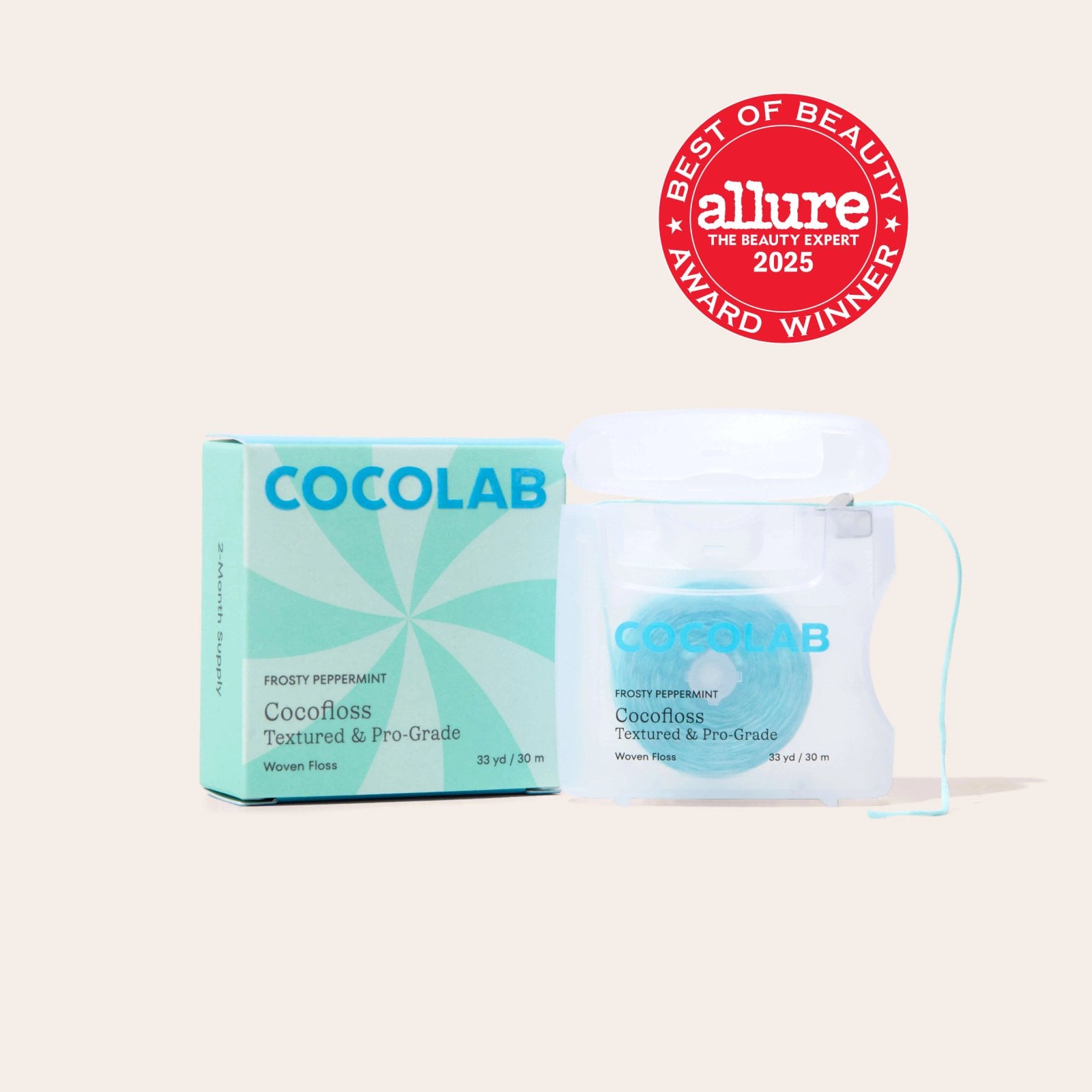
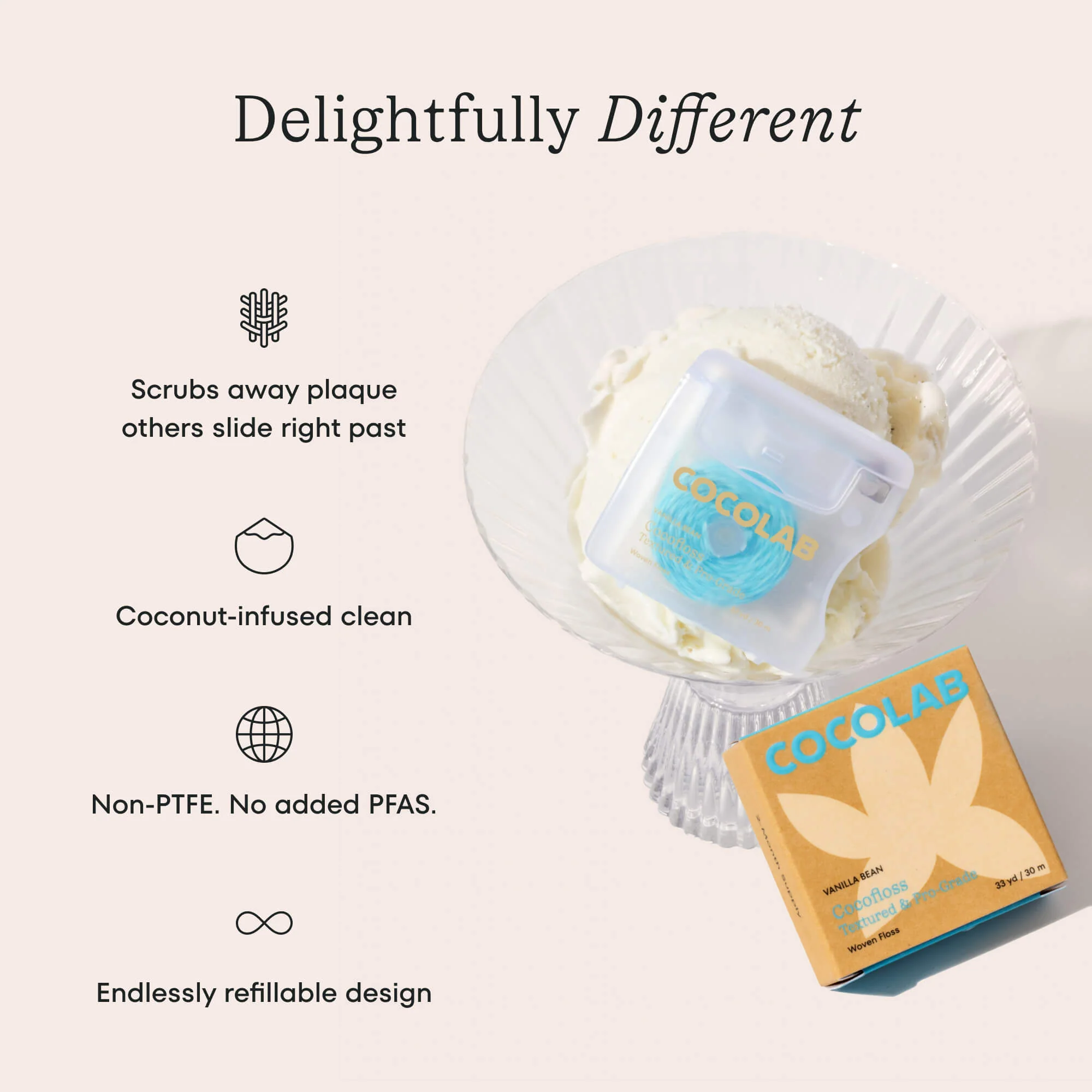
The brand describes its standard floss as more than 500 woven fibers coated with coconut oil. Its stated purpose is to compress between teeth and expand as it moves, helping scrub along the spaces where a smooth, narrow strand may feel less substantial. That is the clearest point of difference on the product pages, and a plausible reason to consider the range if ordinary floss feels too slick or insubstantial. The construction is detailed on the standard listing, while Thin’s page shows how the brand adapts it.
Texture is a preference, not proof of a better clean for every person. The product page’s cleansing language is the company’s claim; it does not establish that this strand outperforms other floss for all users. Technique and fit still matter. If floss catches, shreds, or causes discomfort, the right response is to reconsider the format and ask a dental professional where needed, rather than force a strand through a tight contact.
There is more choice than flavor alone. The core spool is aimed at routine use; Thin responds to narrow spaces; and Threaders combine a guide with floss for more involved dental work. This makes format the useful decision, with scent as a secondary one. Compare the standard spool with Threaders by intended use. The names and product pages are easy to browse, although the highly stylized flavor lineup may matter less to readers who simply want an unscented-feeling, straightforward supply.
- Choose the standard spool when you want the signature woven construction.
- Look at Thin if ordinary floss is difficult to pass between close contacts.
- Consider Threaders when a built-in guide could simplify cleaning around dental appliances.
For the main format, Delightful Mint Dental Floss is the most useful reference point: a full-size 33-yard spool in the brand’s signature construction. The store also lists other flavor options, including the same standard floss format, so shoppers can separate the construction question from flavor choice.
1. Delightful Mint Dental Floss – the standard strand
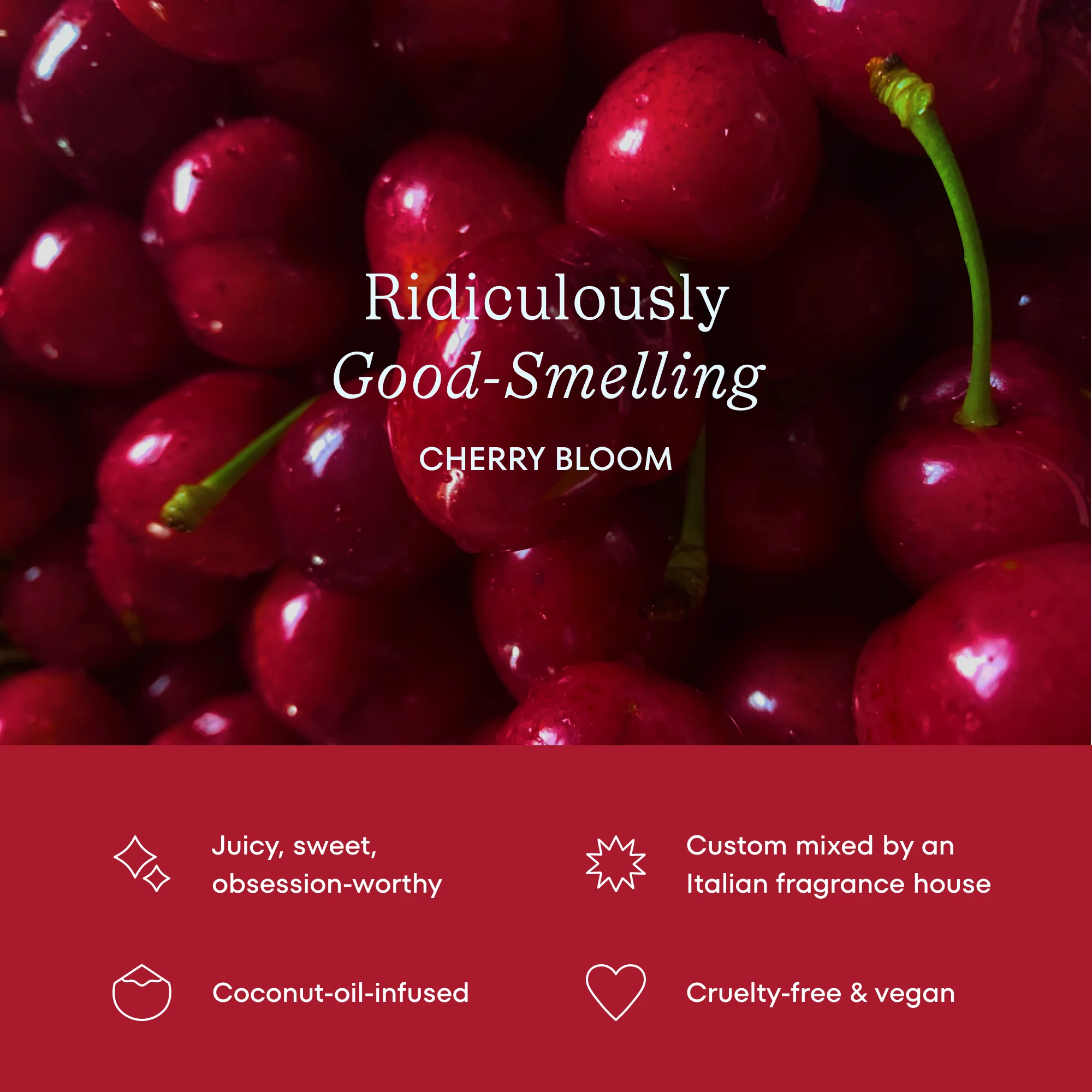
The core Delightful Mint Dental Floss is listed as a 33-yard spool, with the page describing it as a two-month supply. The brand says the strand combines 500+ fibers and coconut oil coating. Those details help explain why it looks and sounds different from very fine, slick floss; they do not guarantee that everyone will prefer its thicker, textured feel.
Readers who want one daily spool and are curious about a more substantial strand are the clearest audience. The flavor is described as a crisp mint, though taste and scent are subjective. We would treat that as an optional design choice rather than a functional reason to select the product. A practical check before choosing is whether the floss can pass comfortably between your teeth without needing excessive pressure.
The page’s useful specifics are straightforward: spool format, stated length, fiber count and coating. The less certain part is how the texture behaves for an individual’s contacts or gums. The standard product page explains the strand, and Cocofloss Thin is the brand’s alternate format. If your dental spaces are tight, the standard version may not be the best place to start. Compare Thin with the original before choosing. The existence of another format in the same range is a meaningful response to that potential mismatch.
2. Cocofloss Thin – a smaller profile for close gaps
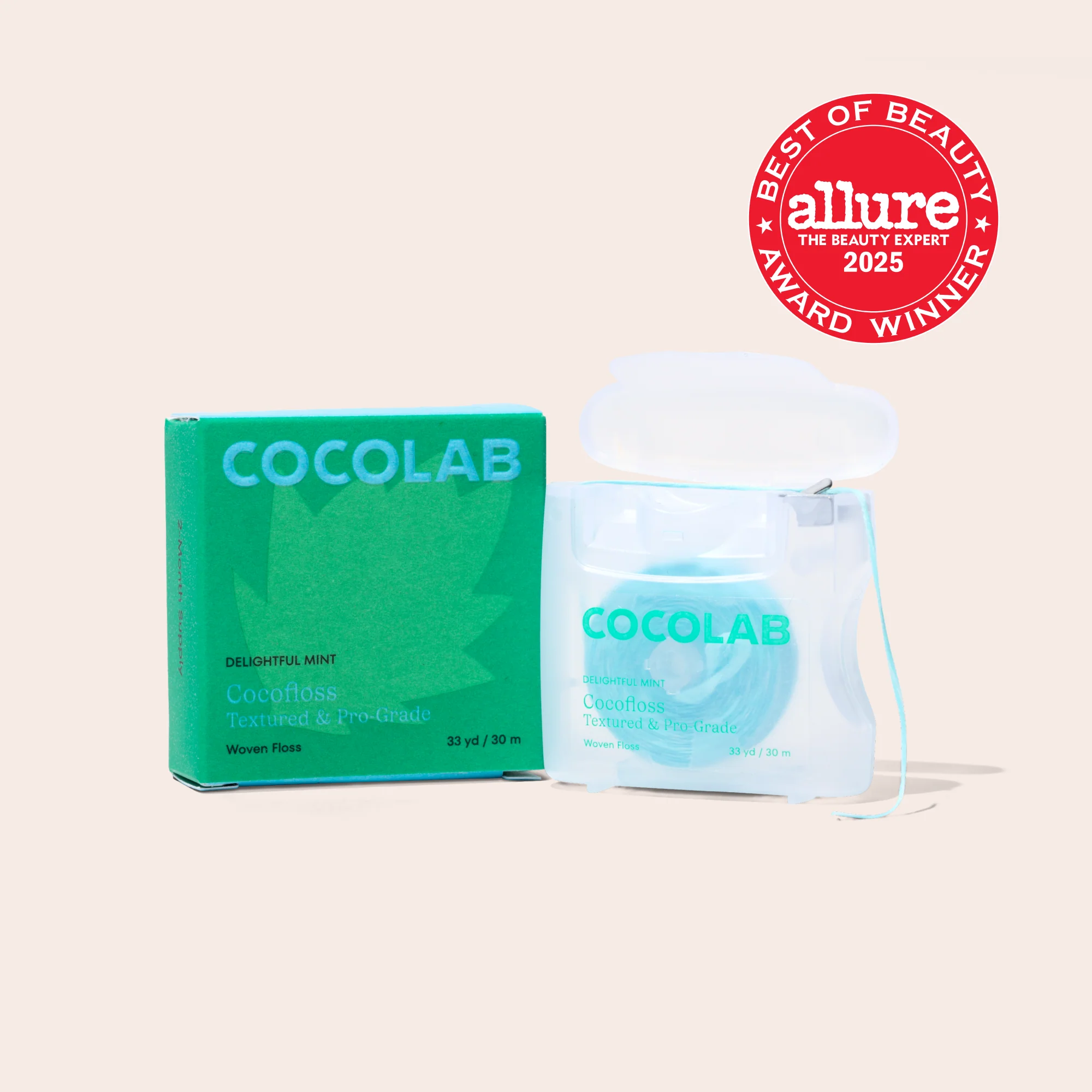
Cocofloss Thin is the most concrete sign that the brand recognizes its standard strand may feel too bulky for some mouths. The company describes Thin as 30% thinner than the original and says it uses 300 woven threads. Its stated use includes tight gaps and dental work, retaining texture while reducing the strand’s profile.
That makes Thin the most sensible first look for a reader who likes the idea of woven floss but struggles to get a thicker strand between teeth. It also gives current users a way to stay within the same product family if the core version is difficult to handle. The important caveat is that “thinner” is a relative description: it does not mean every tight contact will accept it comfortably, and the product page cannot assess a particular dental fit.
The brand presents the two versions as related rather than entirely different products: Thin keeps a woven construction, with fewer threads and a slimmer strand. See the Thin product details beside the original spool when comparing the profile. That is a specific adjustment, not evidence of equivalent feel or results. If you already know that textured floss works for you, it may be a reasonable variant to compare. If the problem is discomfort, bleeding, or floss repeatedly catching, a dentist can help identify whether technique, contact shape, or another tool is the issue.
3. CocoPlush Threaders – for a more specialized job
CocoPlush Threaders address a narrower use case. Cocolab describes them as a floss-and-threader combination intended to help navigate around implants, bridges and braces. Rather than asking a user to handle a separate threading aid and floss, the format joins those roles in one product. The page lists 30 floss-and-threader sections in Delicious Mint. The intended use is described on the Threaders page, while the regular floss listing is the simpler daily option.
That integrated design may be relevant when dental work makes ordinary flossing fiddly. It is not a general upgrade for someone who has no need for a threader. Readers should also follow professional guidance for cleaning around appliances; a product listing cannot replace instructions from the clinician who placed or maintains them. The product’s stated role is specific enough to be useful, but also specific enough that many shoppers can skip it. See CocoPlush Threaders for that job, or the standard spool for everyday use.
Put beside the standard spool and Thin, Threaders show the range’s strongest structural advantage: different formats map to different routines. They are not interchangeable. The threader page is worth checking when you have bridges, braces or implants; for uncomplicated daily flossing, the core spool or thinner variant is a more direct comparison.
- Identify whether your main issue is strand feel, tight spacing or threading around dental work.
- Compare the corresponding format rather than choosing by flavor artwork alone.
- Check the care directions and consult your dental professional if flossing is uncomfortable.
How to read the claims and choose sensibly
Product pages are strongest on construction and intended use. Cocolab identifies strand thickness differences, fiber counts, spool length and Threaders’ integrated design. Those facts make the product family easier to understand than a range described only through flavors. The pages are less helpful on comparative clinical evidence, independent performance, or what a person with a specific dental history should choose.
We would therefore put the fit question first. If your current floss passes comfortably and you want a more textured alternative, the original is the logical point of comparison. If the strand feels too wide, Thin directly addresses that concern. If you need a guide around dental work, Threaders have a distinct job. None of those choices should be treated as universally superior, and the flavor range is not a substitute for a suitable strand.
There is also a routine and value consideration without needing a price claim. The standard and Thin spools are each presented with a length and estimated duration, while Threaders are sold as a set of sections. That means the relevant cost comparison depends on format, quantity and how often you use it. Check the US product pages for current availability and pricing before deciding, since these details can change.
- Start with your current flossing challenge, not the flavor names.
- Read the length and supply description for the format you are comparing.
- Use the store’s current product details for availability and price.
- Ask a dental professional about persistent discomfort or care around dental work.
Where Cocofloss has a clear case
- The fiber count and coating give the signature strand a defined construction story.
- Thin offers a specific lower-profile alternative within the same range.
- Threaders combine two tasks for users cleaning around dental work.
- The product pages identify lengths and intended formats clearly.
Where the range may not fit
- A textured strand can feel too substantial for readers who prefer very fine floss.
- Brand descriptions do not establish superior results for every mouth or technique.
- Flavor and presentation may add little for shoppers focused only on simple utility.
- Threaders are specialized and unnecessary for many everyday routines.
These trade-offs make the range easier to recommend selectively than as a blanket switch. The original spool is the clearest expression of the brand’s design; Thin is the practical alternative when the original profile seems too wide; and Threaders should be considered for their specialized use, not just as another flavor of floss.
Is Cocofloss a good fit for your everyday flossing?
Our recommendation is conditional: Cocofloss is worth considering if you want a woven, textured strand and can pass it comfortably between your teeth. The clearest strength is a range that translates one central idea into a standard spool, slimmer variant and threader for dental work.
The limitation is equally important: the brand’s product information cannot promise that the texture will suit your mouth or establish a universal performance advantage. Start with the format that answers your actual need, check the current US product page, and ask your dental professional if fit or comfort is a concern.
