

A practical way to match BLUETTI portable stations to winter outage essentials, from phones and lights to longer-running household needs.
By November, Canadian households are thinking about earlier sunsets, colder nights and the possibility of a storm disrupting power. A portable reserve can keep selected devices running, but the right choice depends on what matters most in your home and how long you need it.
We reviewed BLUETTI’s Canadian product information for compact models that suit a planned essentials kit. Capacity and output serve different roles: capacity shapes runtime, while output determines which devices can run at once. Check the exact product page and your appliance labels before deciding.
Some links in this article are affiliate links: if you make a purchase through them, we may receive a small commission.
Highlights
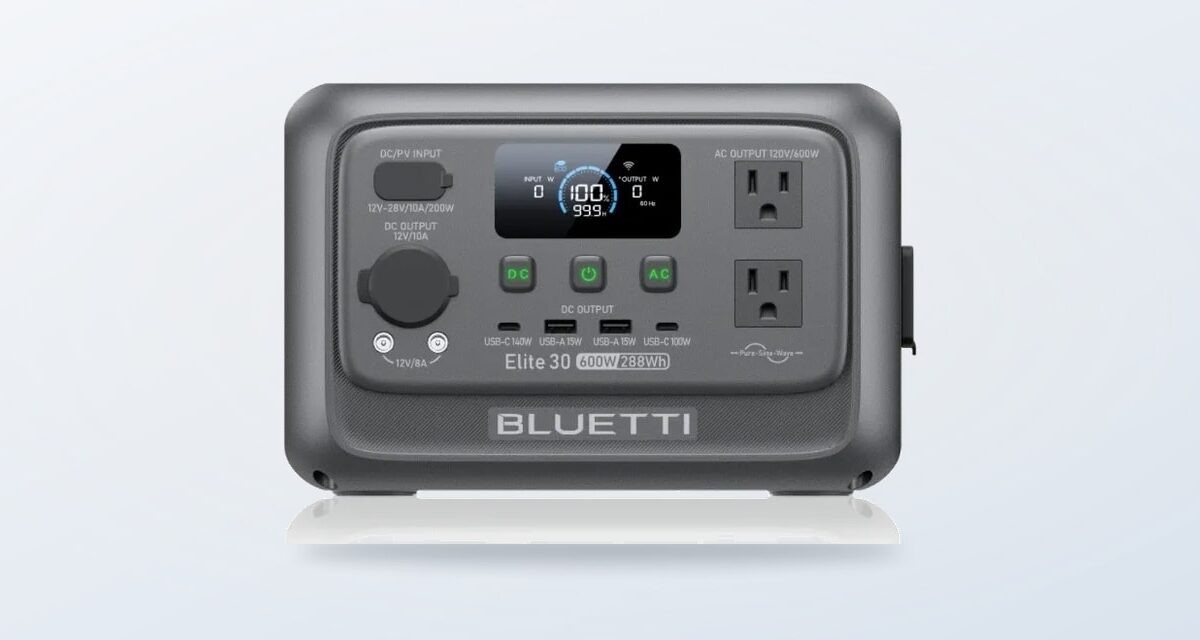
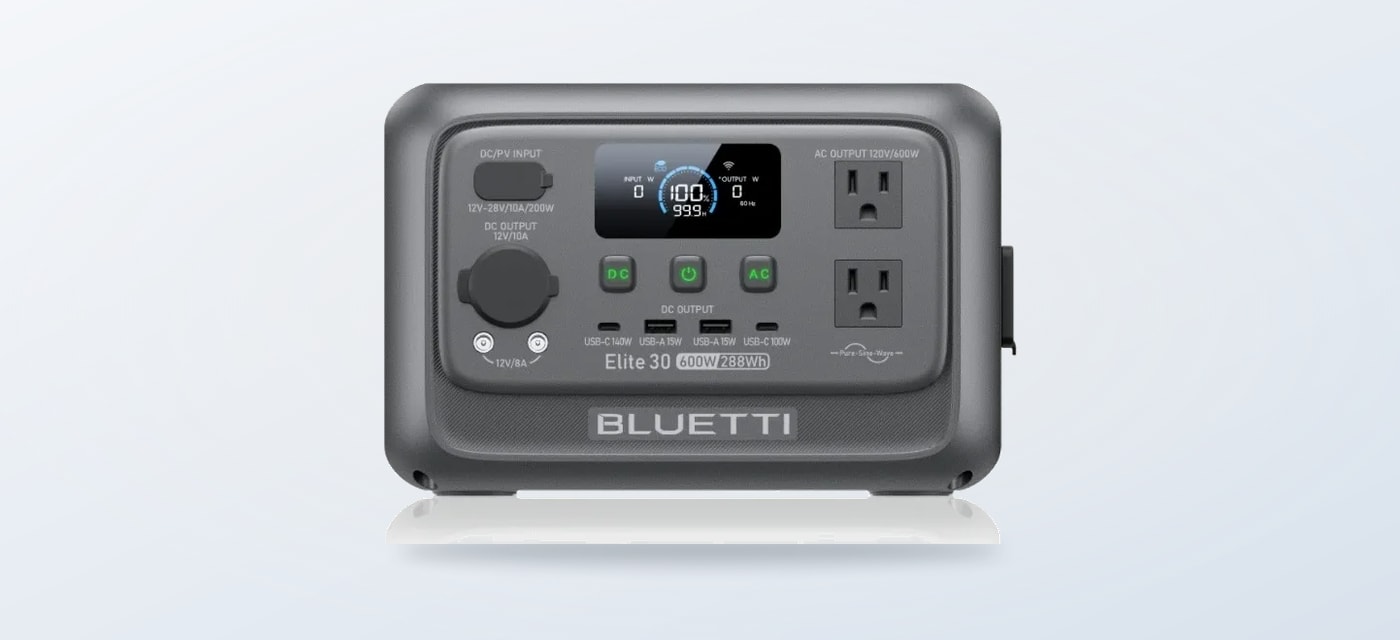
- Elite 30 V2 is a compact option for communications and small essentials, with 288Wh capacity and 600W output.
- AC50B provides 448Wh and 700W of continuous power for a somewhat broader small-load plan.
- AC60 is listed with 403Wh, 600W output and IP65 dust and water resistance; BLUETTI says capacity can expand with compatible batteries.
- A 350W folding solar panel may add a recharge route, but winter daylight and weather make it an uncertain backup plan.
Begin with a short winter essentials list
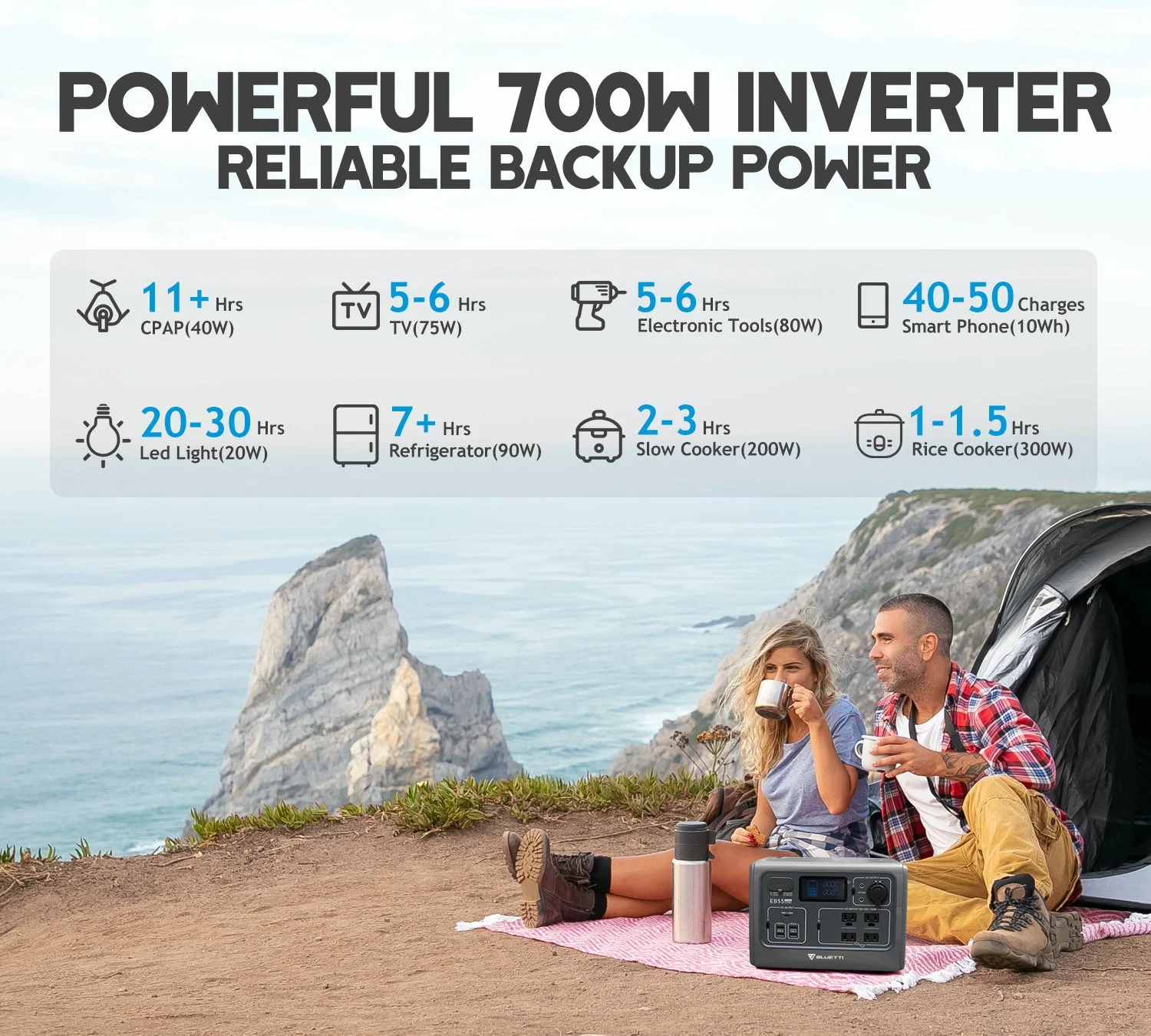
Before comparing stations, write down what you would actually connect during an outage. A phone, modem, LED lamp or medical device has a different draw and urgency from a kettle, space heater or full-size refrigerator. High-wattage heating appliances can exhaust a portable battery quickly or exceed its output rating; do not assume a station can run them because it has household outlets.
Separate essential loads from optional ones. For the first group, note the device wattage and the hours you want it available. Then estimate energy needs by multiplying watts by hours, allowing for conversion losses and device cycling. This is a planning estimate, not a runtime promise. Battery age, temperature, settings and the mix of loads all affect real results.
- Keep communications and lighting at the top of the list.
- Check whether a device needs continuous power or only periodic charging.
- Read the station’s output rating against each appliance label.
- Leave high-draw heating and cooking loads out unless the product specifications support them.
Also decide where the equipment will sit. Cold conditions can affect battery performance, so follow the manufacturer’s operating and storage guidance and keep the station in a suitable dry area. A power station is not a substitute for safe heating, ventilation or carbon-monoxide precautions.
1. BLUETTI Elite 30 V2 for a compact essentials kit
The BLUETTI Elite 30 V2 is the smaller-footprint starting point in this group. BLUETTI lists 288Wh capacity and 600W output, alongside nine ports. That profile makes it worth considering for phones, a small lamp, a router or other modest electronics, as long as their combined demand stays within the stated output.
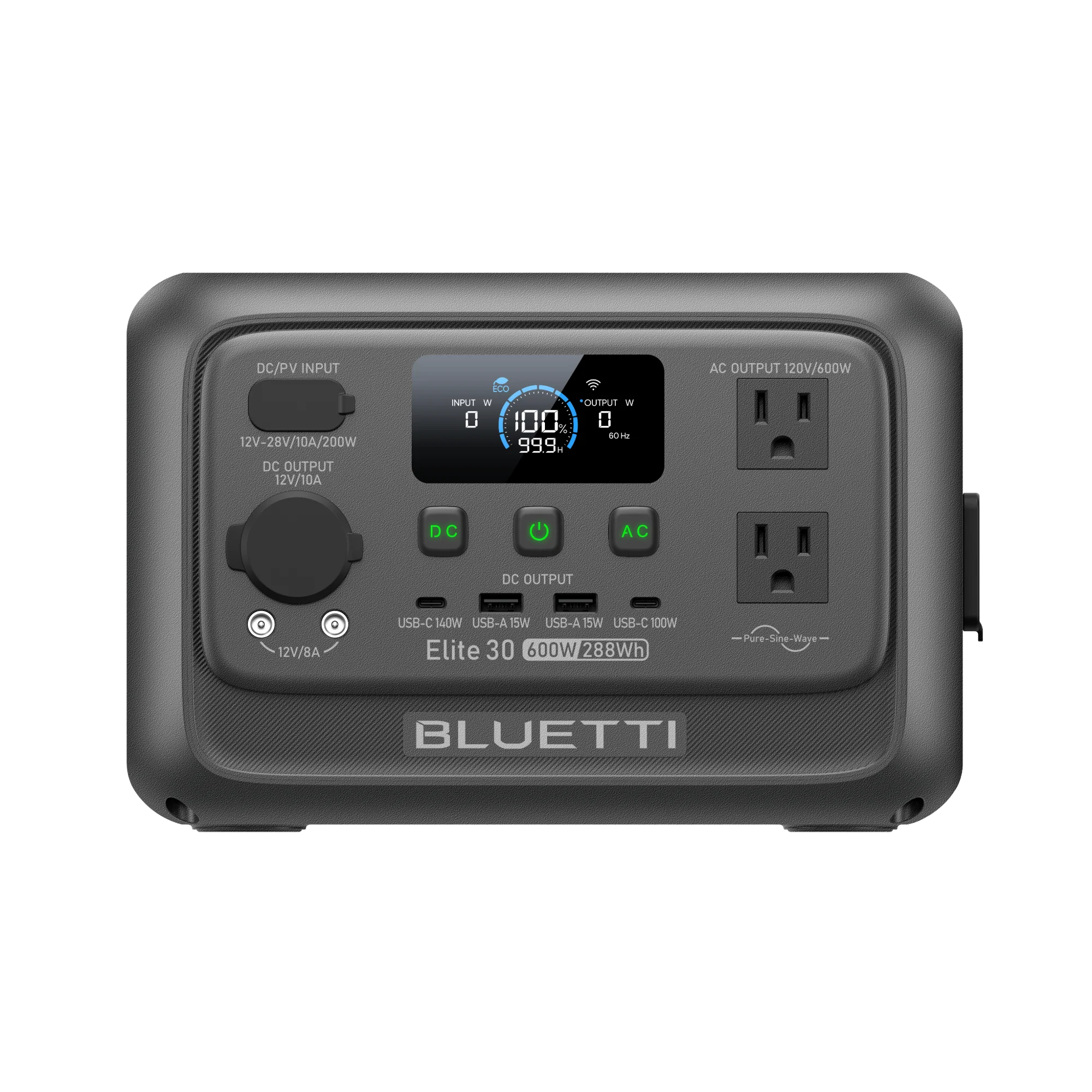
It is a small-load choice, not a whole-room or heating solution. A router’s draw varies by model, and the Elite 30 V2 specifications should be checked against its adapter, and keeping it online for many hours can use more stored energy than a quick phone charge. Check the details on the Elite 30 V2 product page and calculate a realistic reserve rather than relying on a generic runtime figure.
A solar kit may suit a household that can place a panel in a clear, safe location, provided the station and panel are compatible, but winter clouds, low sun and snow cover complicate charging. Pairing a compatible panel should be treated as an additional route, not the only route. For a planned outage, charge the station from the recommended source in advance and review the Elite 30 V2 recharge details and keep cables together.
2. BLUETTI AC50B for a wider small-load plan
The refurbished BLUETTI AC50B raises the listed capacity to 448Wh and continuous output to 700W. That creates more room for a modest load mix or longer use of a single device, though the actual runtime still depends on what is plugged in. BLUETTI describes the battery as LiFePO4 and lists a 700W continuous output; see the AC50B product specifications.
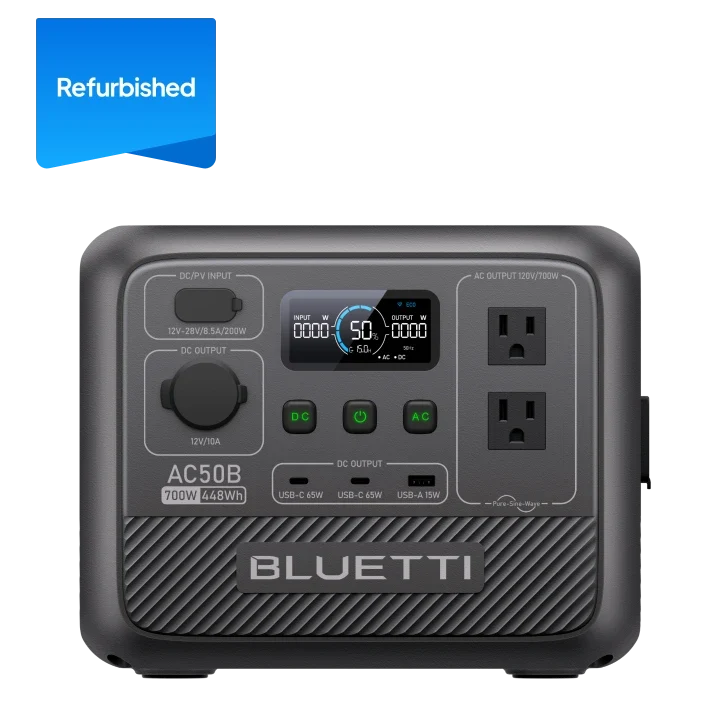
Because this is a refurbished listing, review the Canadian AC50B page for its current condition notes, included accessories, warranty terms and availability before making a decision. Those details are part of the product choice, not fine print to leave until checkout. The AC50B listing also gives the specific port and charging information to compare with your planned kit.
This model can make sense when the compact station feels too limiting but a larger home-backup system would be more than the job requires. Its limit is still clear: 448Wh is a finite reserve. Several devices running together, especially those with heating elements or motors, can use it rapidly.
3. BLUETTI AC60 where weather resistance matters
The refurbished BLUETTI AC60 is listed at 403Wh and 600W output. BLUETTI also states IP65-rated dust and water resistance and expandable capacity from 403Wh to 2,015Wh with compatible expansion batteries. That mix gives it a distinct role for buyers weighing enclosure protection and expansion.
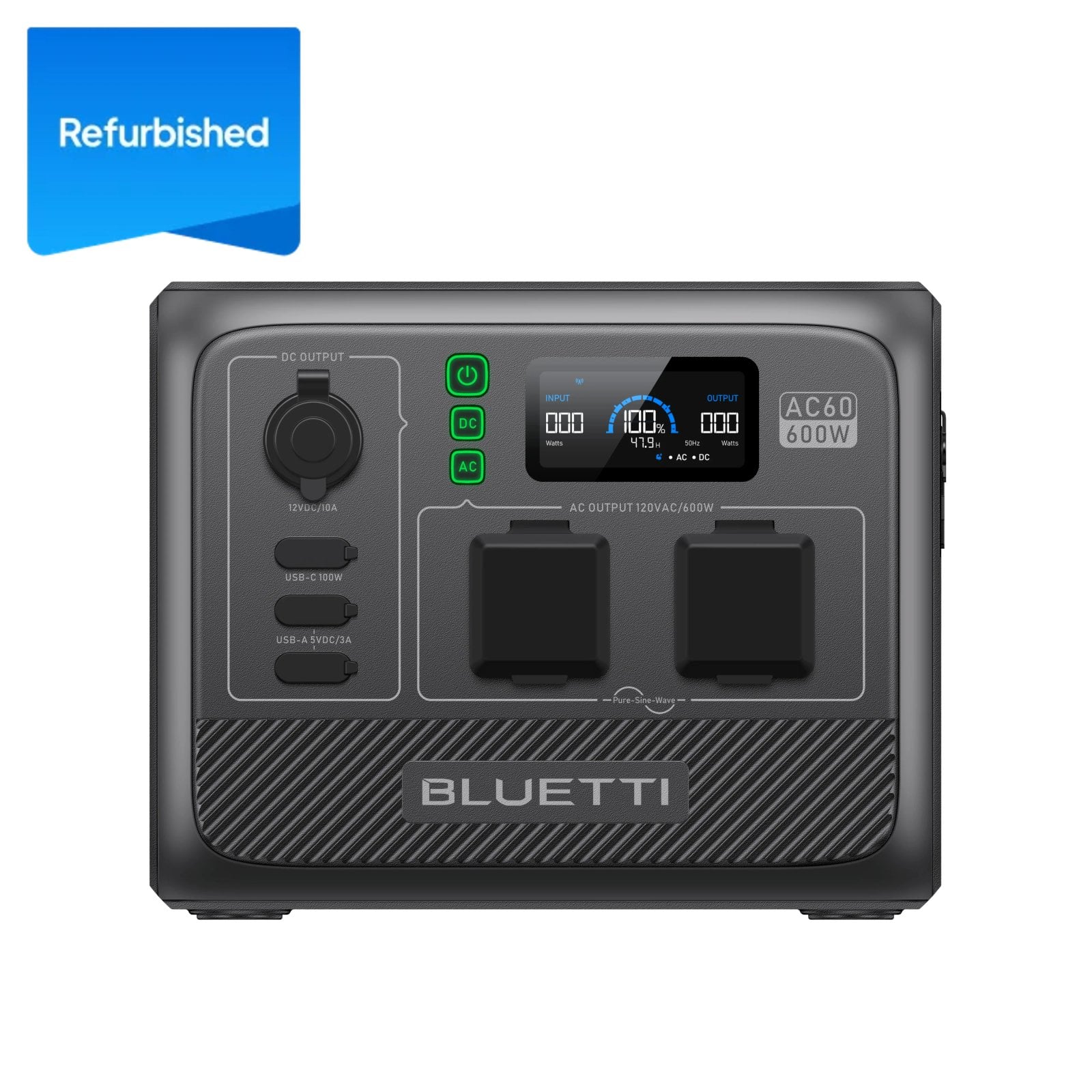
An IP rating does not mean a device should be left exposed in a snowstorm or used contrary to its manual. Keep connectors protected and follow the product guidance. The stated expansion figure depends on the compatible battery configuration, so confirm what is included in the specific refurbished offer. The AC60 product information is the place to verify supported accessories and operating limits.
Compared with the AC50B, its listed capacity is lower while its output rating is also lower; its stated weather resistance and expansion path may matter more to some buyers than that capacity difference. Here, the use environment should guide the shortlist, not a single headline number.
Compare by job, capacity and conditions
| Option | Listed profile | Best fit |
|---|---|---|
| Elite 30 V2 | 288Wh, 600W | Communications and small essentials |
| Refurbished AC50B | 448Wh, 700W | More reserve for a modest load mix |
| Refurbished AC60 | 403Wh, 600W; IP65 stated | Buyers weighing enclosure rating and expansion |
The table is a first filter, not a runtime ranking. Check the load’s running wattage and any startup surge, then compare that with the station’s continuous and surge ratings. For a fridge or pump, ask whether the model can handle its compressor or motor startup and how much energy that device uses over a full day. BLUETTI’s product pages may provide relevant ratings, but the appliance label remains essential.
Plan charging before the forecast turns
Solar charging is attractive when the grid is down, but Canadian winter conditions make it variable. BLUETTI’s 350W folding solar panel listing describes a panel category that can pair with compatible stations; its actual contribution depends on sunlight, orientation, shade, temperature and the station’s input limits. Check compatibility on the solar panel page rather than assuming it can connect to every model.
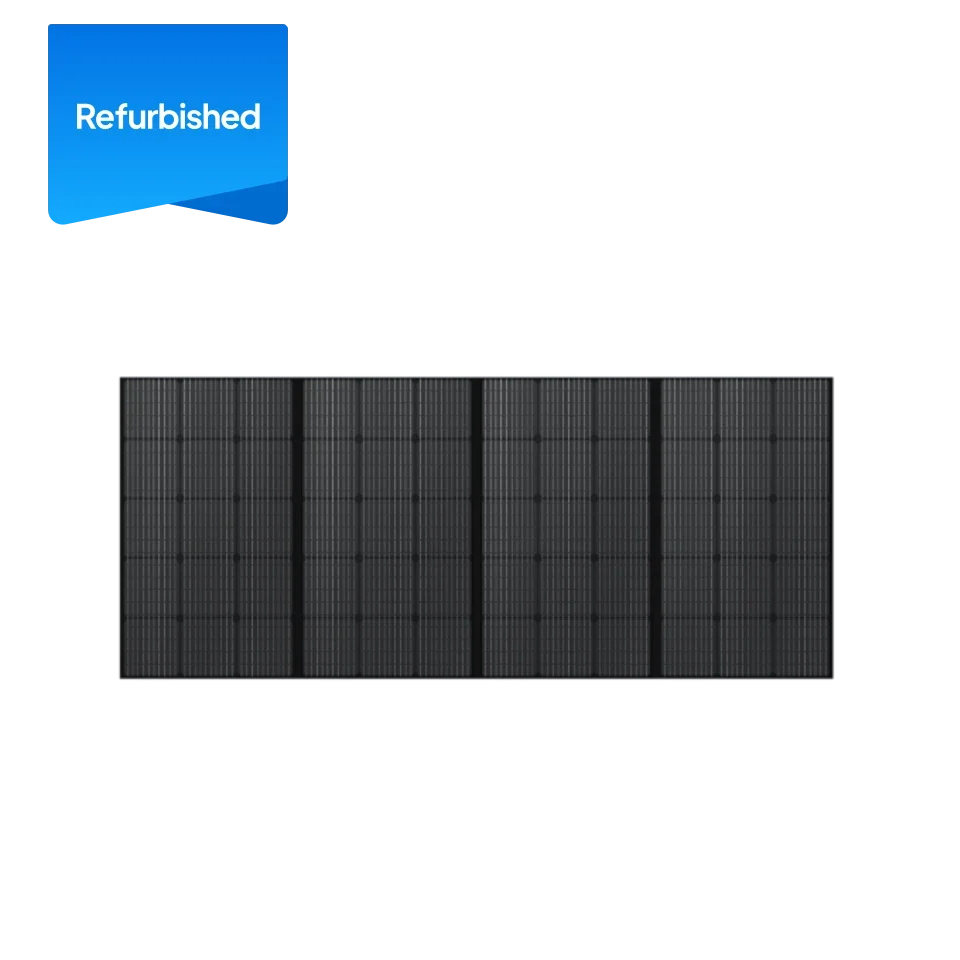
A sensible winter plan starts with a full charge from the recommended AC source before severe weather. Keep the manual accessible, test your cable arrangement during normal conditions and identify a safe place for the unit. If solar is part of the plan, treat it as replenishment when conditions allow, while keeping enough stored energy for the first hours of an outage.
- Confirm compatible charging inputs and cable requirements.
- Store the station within the temperature and moisture guidance in its manual.
- Prioritise essential loads and recharge devices only when needed.
- Review warranty, refurbishment condition and included accessories on the exact Canadian listing.
What matters in the BLUETTI range
Strengths for a planned essentials setup
- Several capacity and output tiers let buyers size around small electronics or a broader modest-load kit.
- The AC60 listing adds stated IP65 dust and water resistance and a compatible expansion route.
- Solar panels offer an alternate charging input when the station and panel are compatible.
Limits to account for before winter
- Portable stations have finite stored energy and are not automatically suitable for electric heating or large appliances.
- Winter solar availability can be inconsistent, so it should not replace advance charging.
- Refurbished product terms, included parts and availability can vary by listing and should be checked directly.
Which BLUETTI station fits your winter essentials?
For a short list of phones, lights and modest electronics, we would start by checking the Elite 30 V2’s output and reserve against those exact devices. If the plan needs more stored energy, compare the AC50B. Consider the AC60 when its stated resistance rating or expansion path addresses a real need in your setup.
The main limitation is that no compact unit removes load planning or the need to plan recharging. Confirm appliance requirements, operating guidance and current product details on the Canadian store before choosing.
