
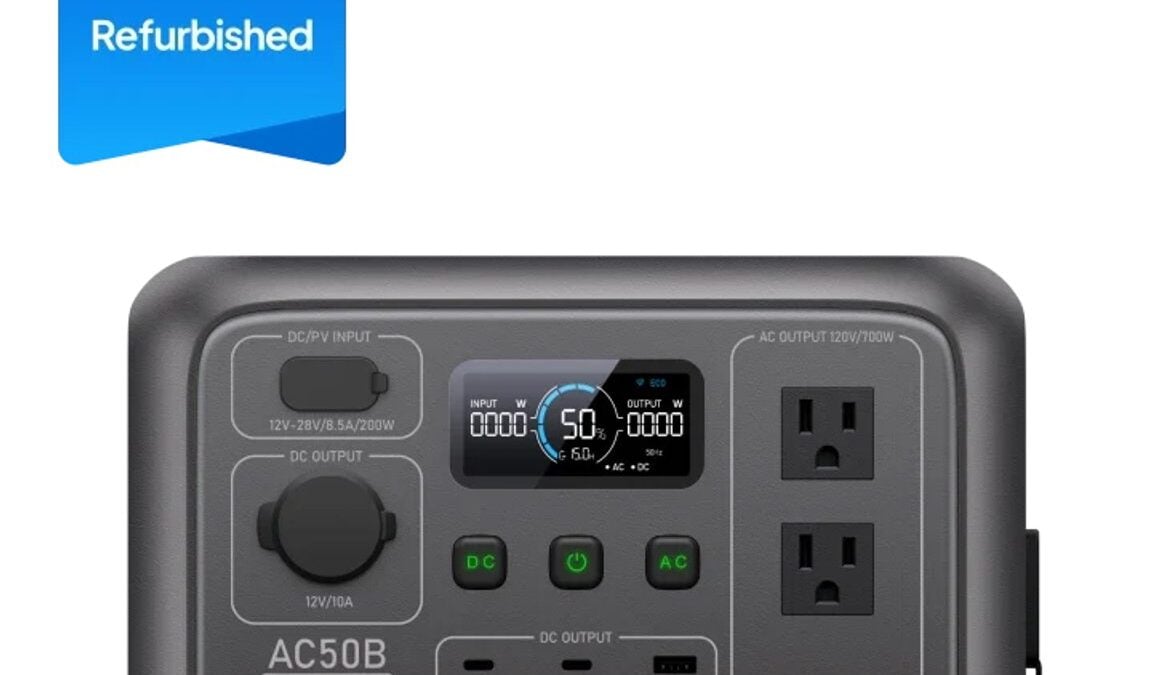

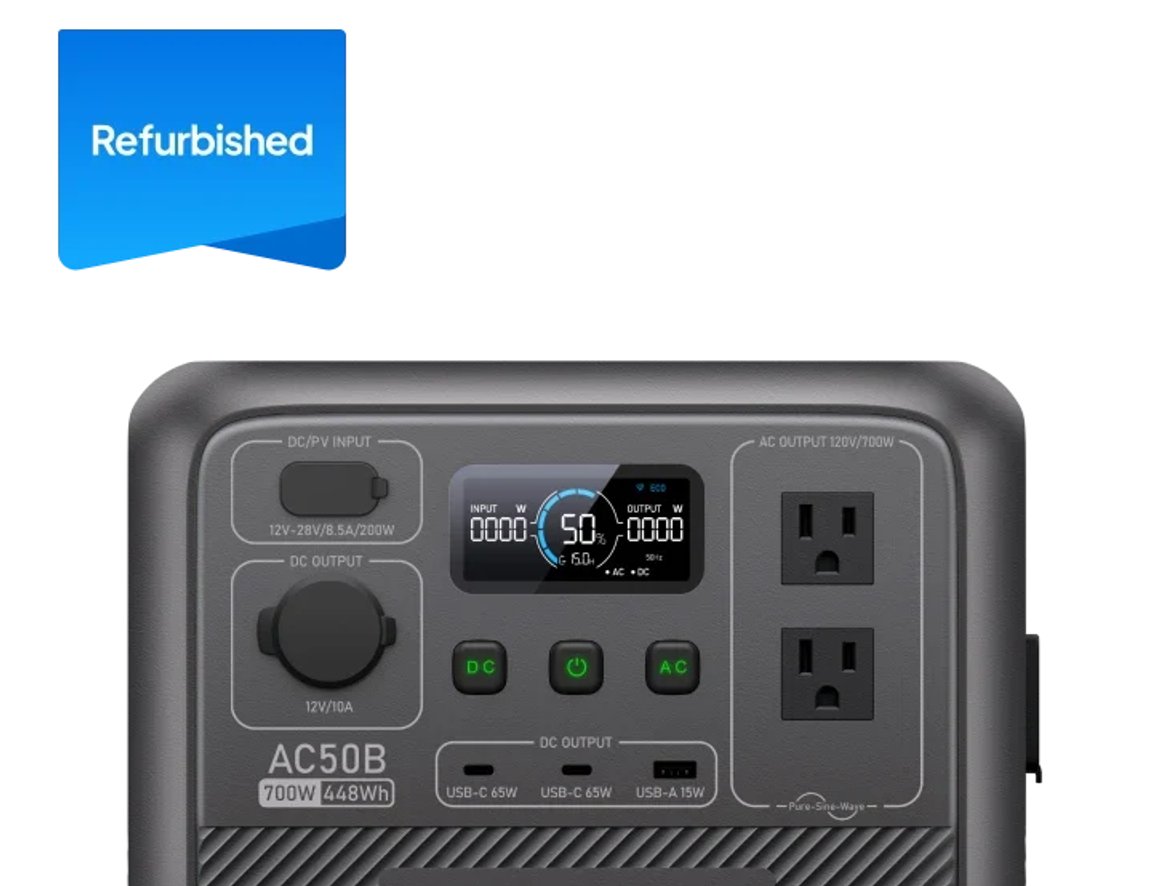
Compare BLUETTI’s compact, balanced and higher-output stations by portability, capacity and the kind of backup each can realistically support.
Choosing a portable power station is mostly a trade between carried weight, stored energy and the appliances you hope to run. The model with the largest number on its spec sheet is not automatically the sensible pick: it may be harder to move, cost more to equip and still need careful load planning. Here we compare three BLUETTI options listed for Canada, then place them against familiar alternatives such as a power bank or fuel generator.
Our comparison uses product information on the Canadian store, including the Elite 100 mini, AC60P and AC180 listing. Specs describe rated output and stored capacity; they do not promise a fixed runtime, since device draw, conversion losses and operating conditions all matter. The AC180 page we found is a refurbished listing, so stock and condition are worth checking before treating it as a like-for-like new purchase.
Some links in this article are affiliate links: if you make a purchase through them, we may receive a small commission.
Highlights
- Elite 100 mini is the portability-first choice for lighter electronics and shorter trips.
- AC60P offers a useful middle tier: 600W output, 504Wh capacity and IP65 protection are listed by BLUETTI Canada.
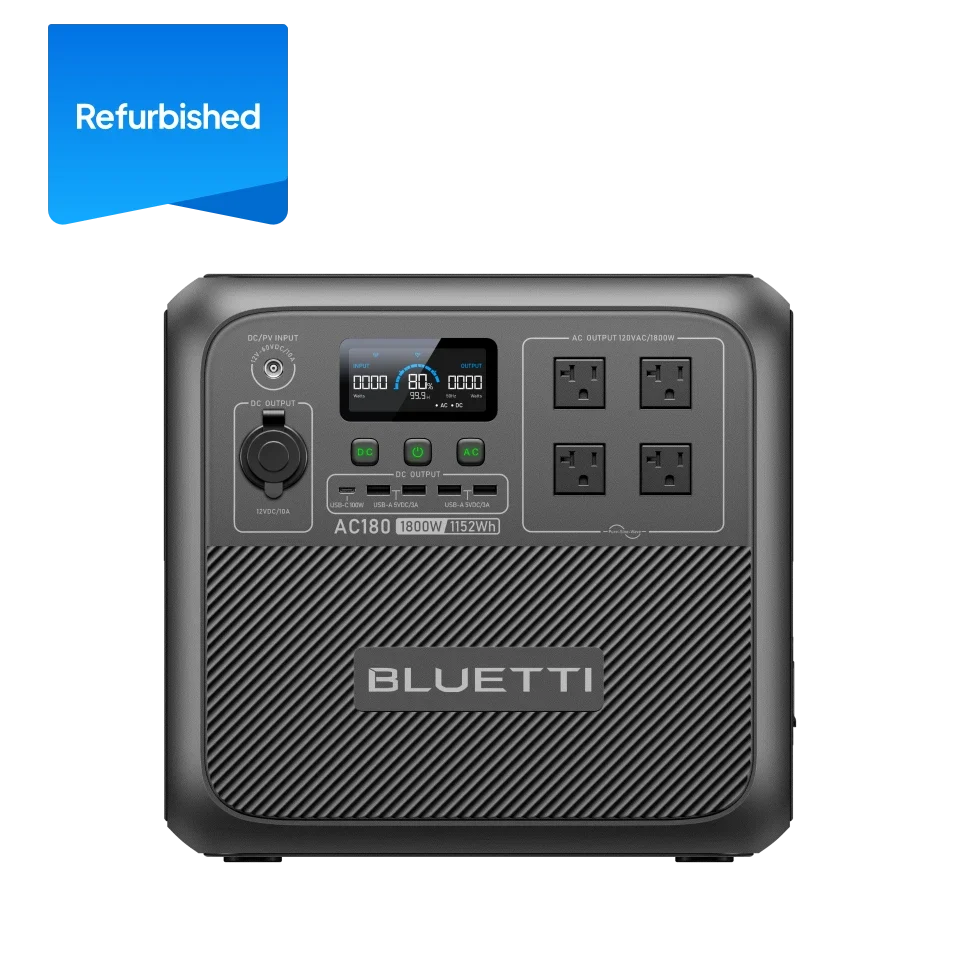
- AC180 makes more sense for higher-draw appliances, with 1,800W output and 1,152Wh listed capacity.
- A power bank wins for pocketable phone charging; a fuel generator suits sustained high loads when fuel, noise and ventilation are manageable.
The comparison at a glance
| Option | Listed scale | Best fit | Main compromise |
|---|---|---|---|
| Elite 100 mini | 1,004Wh; 700W | Travel and lighter essentials | Less headroom for appliances |
| AC60P | 504Wh; 600W | Compact outdoor use | Shorter reserve than larger units |
| AC180 | 1,152Wh; 1,800W | Higher-output household devices | More bulk; listed page is refurbished |
| Power bank / fuel generator | Varies by type | Phone-only / long high-load use | Limited output / fuel and exhaust |
These figures are a starting point, not a runtime ranking. A 1,152Wh station cannot be assumed to power a particular refrigerator for a whole day without its actual consumption and cycling pattern. Output in watts helps answer whether a device can start and run; watt-hours help estimate how long energy might last. Check both, along with connector type, recharge options and the listing’s current configuration. Review the Elite 100 mini listing alongside the AC60P specifications and the AC180 details before settling on a tier.
1. Elite 100 mini – the travel-first pick
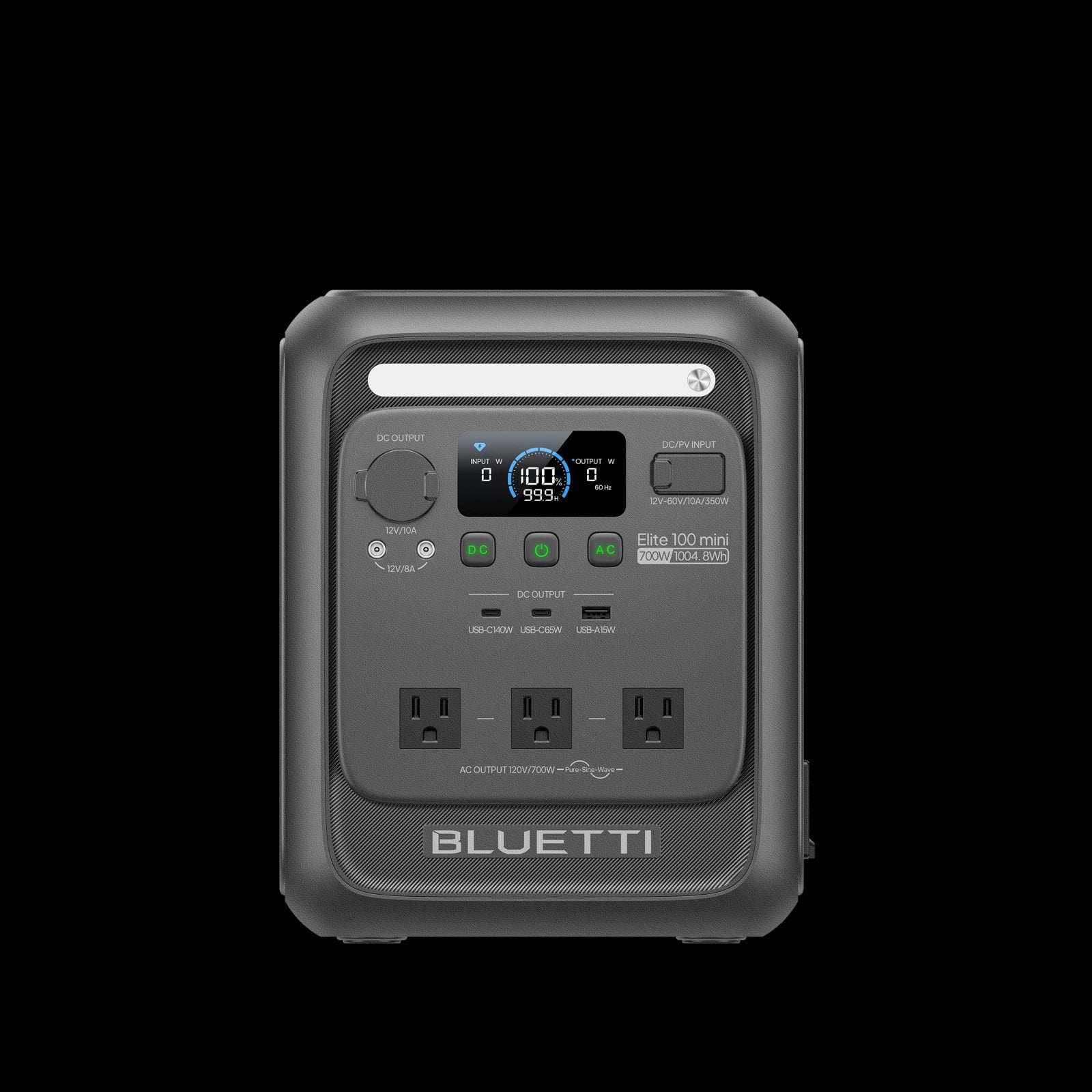
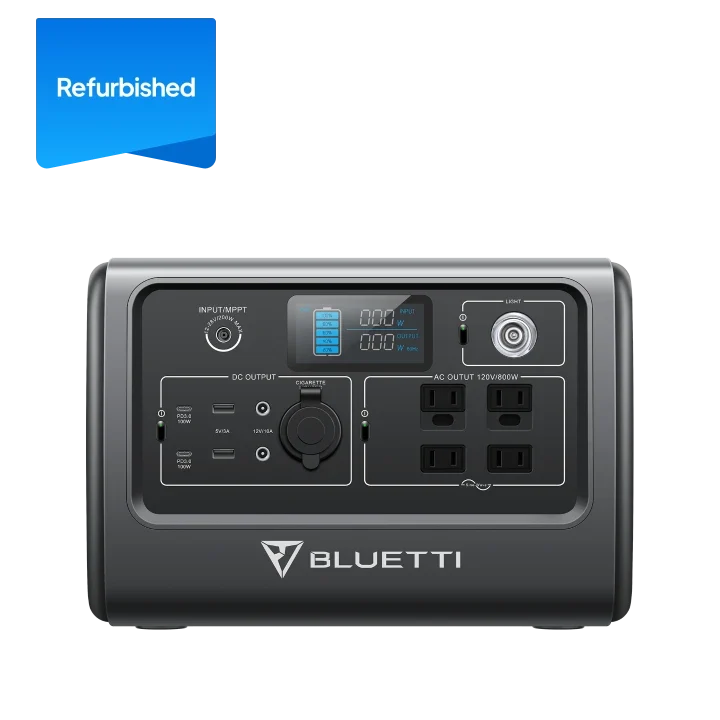
The Elite 100 mini is the clearest fit when carrying convenience leads the decision. BLUETTI lists 1,004Wh capacity, 700W output and nine ports, a combination aimed at running several modest devices without stepping into a large backup system. That can suit a campsite, a work setup away from an outlet or keeping phones, cameras and a laptop topped up during a short interruption. The product page describes versatile charging, so inspect the included cable and supported input details for the exact configuration.
Its ceiling matters. A 700W rating rules out some high-demand appliances, and capacity can disappear faster than expected when several devices run together. Heating elements, kettles and similar loads often draw far more than a phone or laptop; their startup and sustained draw should be checked against the device label. The Elite 100 mini page is therefore a practical choice for lighter essentials, not a promise of whole-home backup. Compare its listed output with the smaller AC60P if ruggedness is more important than greater stored energy, and check the AC180 listing when appliance headroom is your priority.
2. AC60P – a compact middle ground
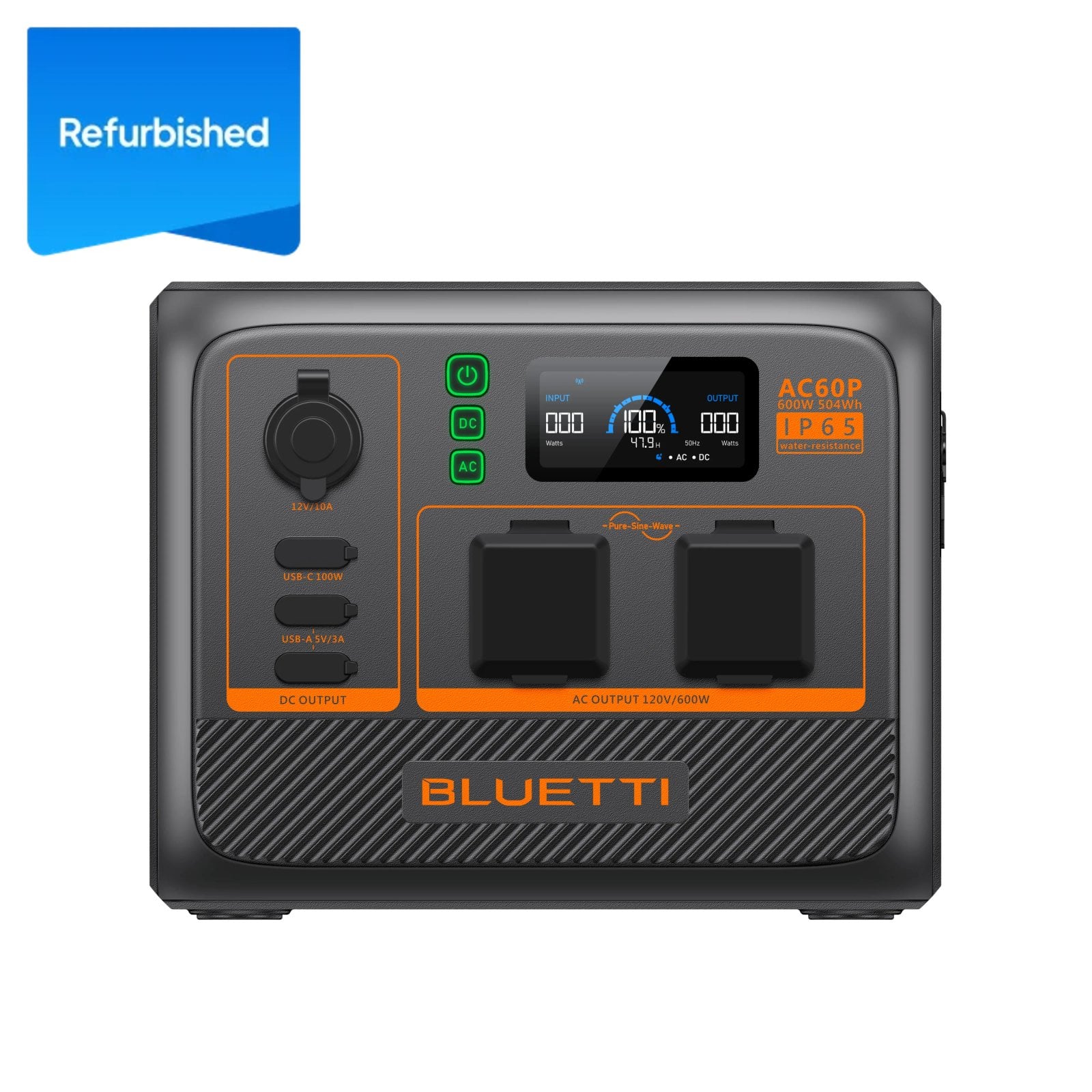
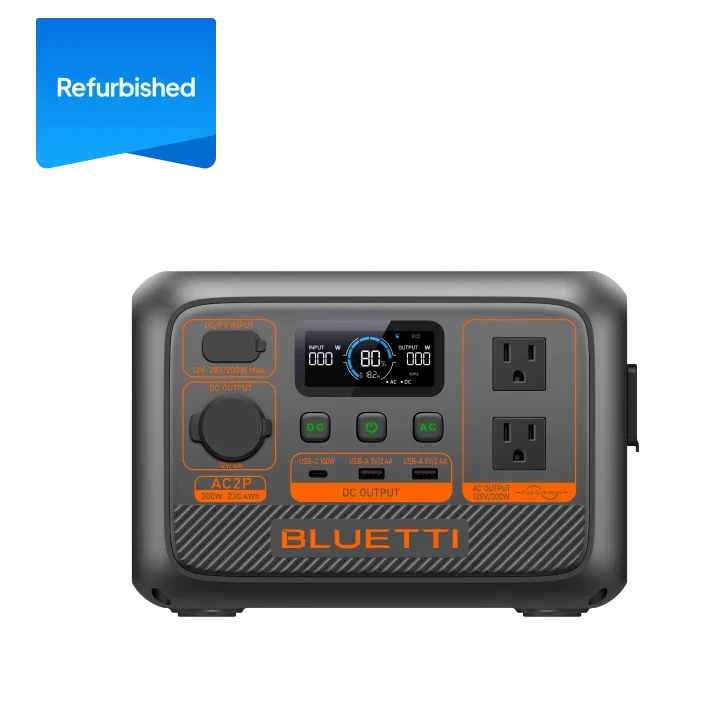
The AC60P sits in an interesting spot: the Canadian listing specifies 600W output and 504Wh capacity, plus IP65 dust and water resistance. That makes it appealing for outdoor settings where a bit of exposure is part of the plan, though IP protection is not permission to submerge the unit or ignore its manual. BLUETTI also says capacity can expand from 504Wh toward 2,015Wh with compatible battery expansion, giving this model a growth path if your needs change.
The cost of that middle ground is runtime. Its base capacity is lower than the Elite 100 mini’s listed capacity, so it is not the automatic step-up for longer power cuts. The benefit is a more rugged brief and expansion potential, not a simple across-the-board improvement. Check the required expansion battery, cables and compatibility on the AC60P product page; those extras affect portability and the full system you would actually own. For ordinary indoor use, compare it directly with the Elite 100 mini and with the AC180 rather than paying for protection you may not need.
3. AC180 – more output for heavier loads
When the plan includes higher-draw appliances, the AC180 has the strongest output of these three: BLUETTI lists 1,800W AC output, 1,152Wh capacity, nine ports and four recharge routes covering AC, solar, car and generator input. The wider output margin makes it the more credible choice for selected kitchen appliances, tools or several devices at once, provided each device’s running and startup demand stays within the model’s limits.
There are two qualifications. First, 1,152Wh remains a finite store, so a high-output appliance may drain it quickly; wattage capability is not the same as long runtime. Second, the Canadian page surfaced in our research was specifically a refurbished AC180 listing. Buyers should verify current availability, refurbishment terms, included accessories and warranty on that exact page. Check the AC180 listing for those details, then compare against the AC60P if the appliance load is modest or the Elite 100 mini if carrying size comes first.
How BLUETTI compares with common alternatives
A conventional power bank is smaller, simpler and usually the best answer when the actual requirement is a phone, earbuds or a tablet. It does not offer the household-style AC outlets and larger energy reserve expected from these stations. A compact station such as the Elite 100 mini bridges that gap for camping and mixed electronics, while the AC60P adds a ruggedness claim and expandable capacity.
A fuel generator sits at the other end. It can make sense for long-duration, high-load work when refuelling is practical, but it brings engine noise, fuel handling and exhaust. It must be operated outdoors according to its safety instructions. A battery station is quieter at the point of use and can be recharged from the grid or compatible solar input, but it cannot run indefinitely without replenishment. The AC180 offers more output than the other two options here, yet still calls for choosing loads and recharge windows deliberately.
- Write down each device and its running wattage; note startup surge where relevant.
- Decide how many hours of operation matter, then estimate energy use rather than relying on capacity alone.
- Check charging sources and accessories for your actual setting, including solar panel compatibility.
- Confirm weight, dimensions, warranty and current product condition on the Canadian product page.
These checks are especially useful when comparing headline numbers across brands. Battery capacity is measured in watt-hours, but usable energy at an AC outlet is reduced by conversion and operating losses. Rated output is also not a substitute for checking the product’s surge behavior or port limits. Use manufacturer documentation for the appliance and power station together. The Elite 100 mini specifications, AC60P listing and AC180 page provide a shortlist; they do not replace a load calculation.
Which one is the better buy for each use?
For weekends away with camera gear, phones and a laptop, choose the Elite 100 mini if its listed 700W output covers the devices and you value a broad port selection. If dust and water resistance are more relevant, the AC60P is the more specific outdoor pick, with compatible expansion available for a larger reserve. For backup involving devices that need more than 600W, the AC180 is the strongest candidate here, subject to the refurbished listing’s availability and terms.
- Best for light travel loads: Elite 100 mini.
- Best for rugged compact use and possible expansion: AC60P.
- Best for higher-output appliances: AC180, after confirming condition and load fit.
Where BLUETTI has an edge
- A range that spans compact units through higher-output stations.
- Solar and other recharge routes are available on selected models.
- The AC60P listing identifies IP65 protection and compatible capacity expansion.
Where the trade-offs show
- Capacity and rated output do not guarantee a particular runtime.
- Larger stations and expansion batteries add weight and setup complexity.
- The AC180 Canada page found for this comparison is refurbished, so terms need checking.
For a smaller, occasional outage plan, a compact unit can be easier to store and move than a larger station that remains underused. For repeated outages, multiple appliances or tools, prioritise output and realistic energy needs, then consider whether a larger battery system or a professionally installed backup solution suits the job better. BLUETTI’s portable range is most convincing when the requirement is specific: a few essentials, a chosen set of appliances or mobile power away from the grid. It is less persuasive as a vague substitute for every role a home generator can fill.
Which BLUETTI station fits your actual load?
Our pick by use case is Elite 100 mini for lighter travel, AC60P for rugged compact use and AC180 for greater appliance output. The honest limit is that none should be chosen on capacity alone: check device draw, runtime, accessories and, for the AC180, the listing’s refurbished terms. Review the Canada product pages and current configurations before choosing.
BLUETTI Power Stations Compared: Which Size Fits Your Use?
