

A closer look at BLUETTI’s clean-energy roots, its distinct product families and the questions that help a new reader make sense of the range.
Portable power can mean very different things: a compact station for a campsite, a battery system for an RV, or backup for appliances at home. BLUETTI operates across those needs, so its name on a product does not by itself tell you which setup makes sense.
We reviewed the brand’s Canadian product and company information to trace the thinking behind the range, what its product families are built to do, and where a first-time reader should look more closely. Its Canadian store presents portable stations, solar generator kits, panels and home backup as connected parts of a clean-energy offering.
Some links in this article are affiliate links: if you make a purchase through them, we may receive a small commission.
Highlights
- BLUETTI frames its work around portable power stations, solar charging and home backup.
- The Elite 100 mini is a smaller-format station listed at 1,004.8Wh and 700W.
- The Elite 300 combines 3,014Wh capacity and 2,400W output for more demanding portable use.
- FridgePower is purpose-built as refrigerator backup, a more focused proposition than a general power station.
A clean-energy brief built around practical settings
BLUETTI describes itself as a technology pioneer in clean-energy solutions, with a focus on off-grid solar power. On its Canadian site, that broad statement becomes a practical catalogue: portable power stations, solar panels, solar generator kits, expansion batteries, RV systems and appliances-focused backup.
That breadth matters because these products are not interchangeable. A portable station is a self-contained battery with power outlets; solar panels can replenish compatible units when conditions allow; expansion batteries increase stored energy in compatible systems. Home backup products are framed around a specific household concern or a more integrated installation. The brand’s story, as presented to Canadian shoppers, is less about one gadget than matching stored energy and charging to a setting.
For readers new to the category, a sensible starting point is the job. List the devices that matter, their wattage and how long they need to run. Then check both output and capacity on the product page. Output is the limit on what can run at once; capacity is the energy available over time. A larger number in one column does not answer both questions.
- Name the essential device or devices.
- Check whether their combined draw fits the station output.
- Estimate the hours of backup you actually need.
- Decide whether solar or vehicle charging is realistic for your setting.
A range that moves from compact to expandable
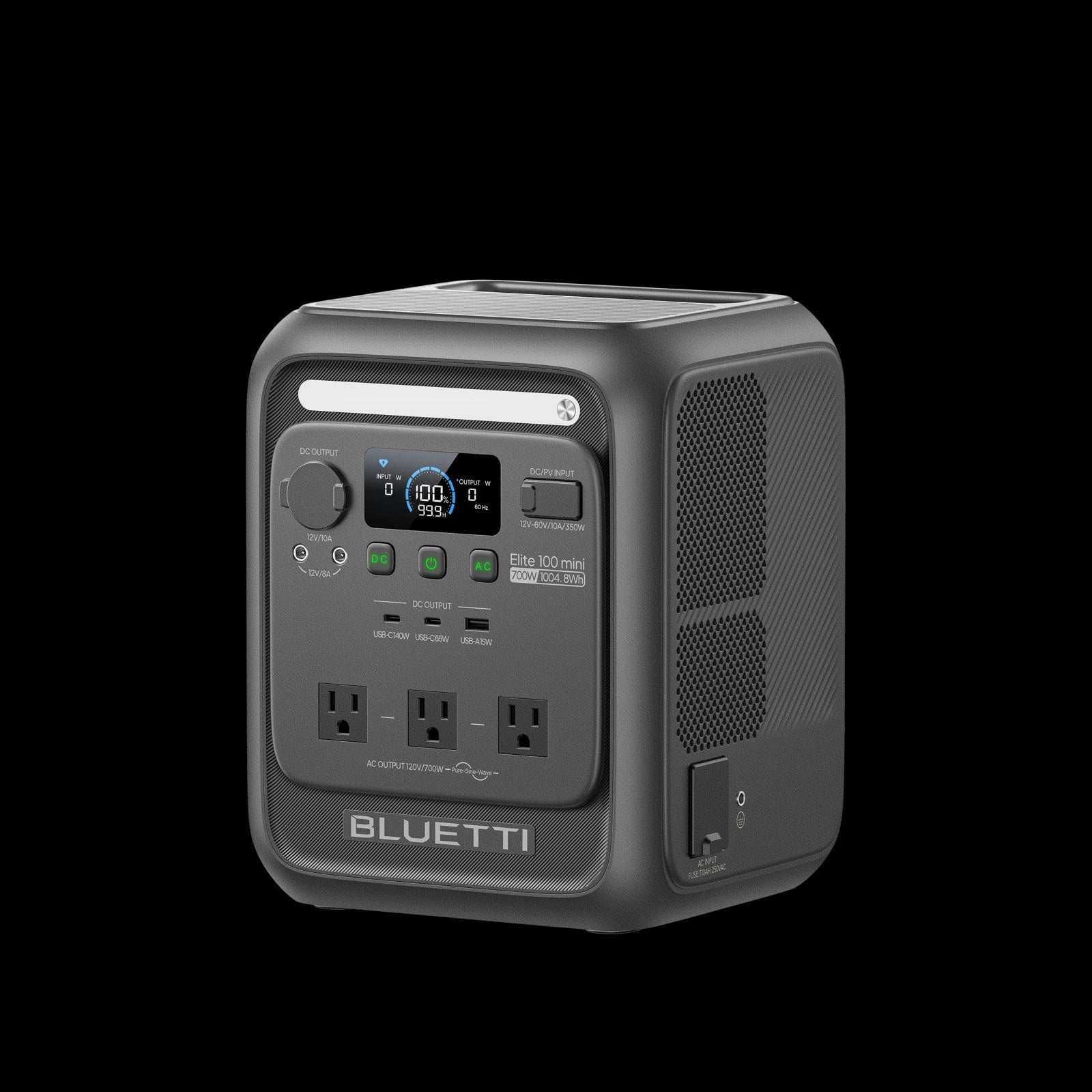
The product family gives the brand story more shape. Elite 100 mini is listed at 1,004.8Wh and 700W, positioning it as a portable option for lighter loads and shorter trips. Its smaller footprint may suit someone prioritizing carryability, though it does not replace a higher-output household backup system. Check the compatible ports, recharge options and device loads before deciding.
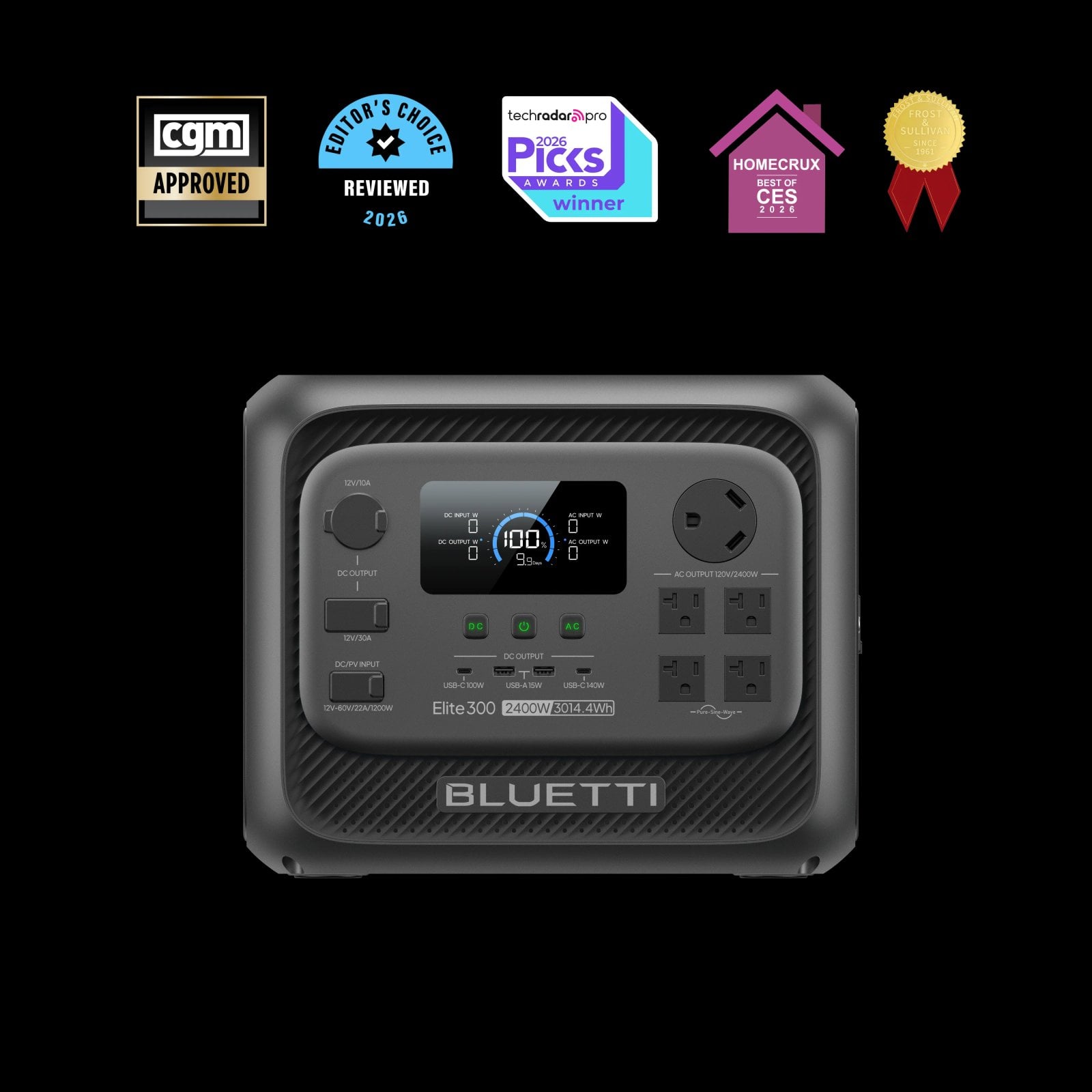
The Elite 300 steps into a different class, with listed capacity of 3,014Wh and output of 2,400W. BLUETTI presents it for both RV readiness and home reliability. That combination suggests a flexible middle ground for users who need more stored energy but still want a portable unit. Its size and total system cost will depend on how it is configured, so confirm dimensions and included accessories on the Canadian listing.
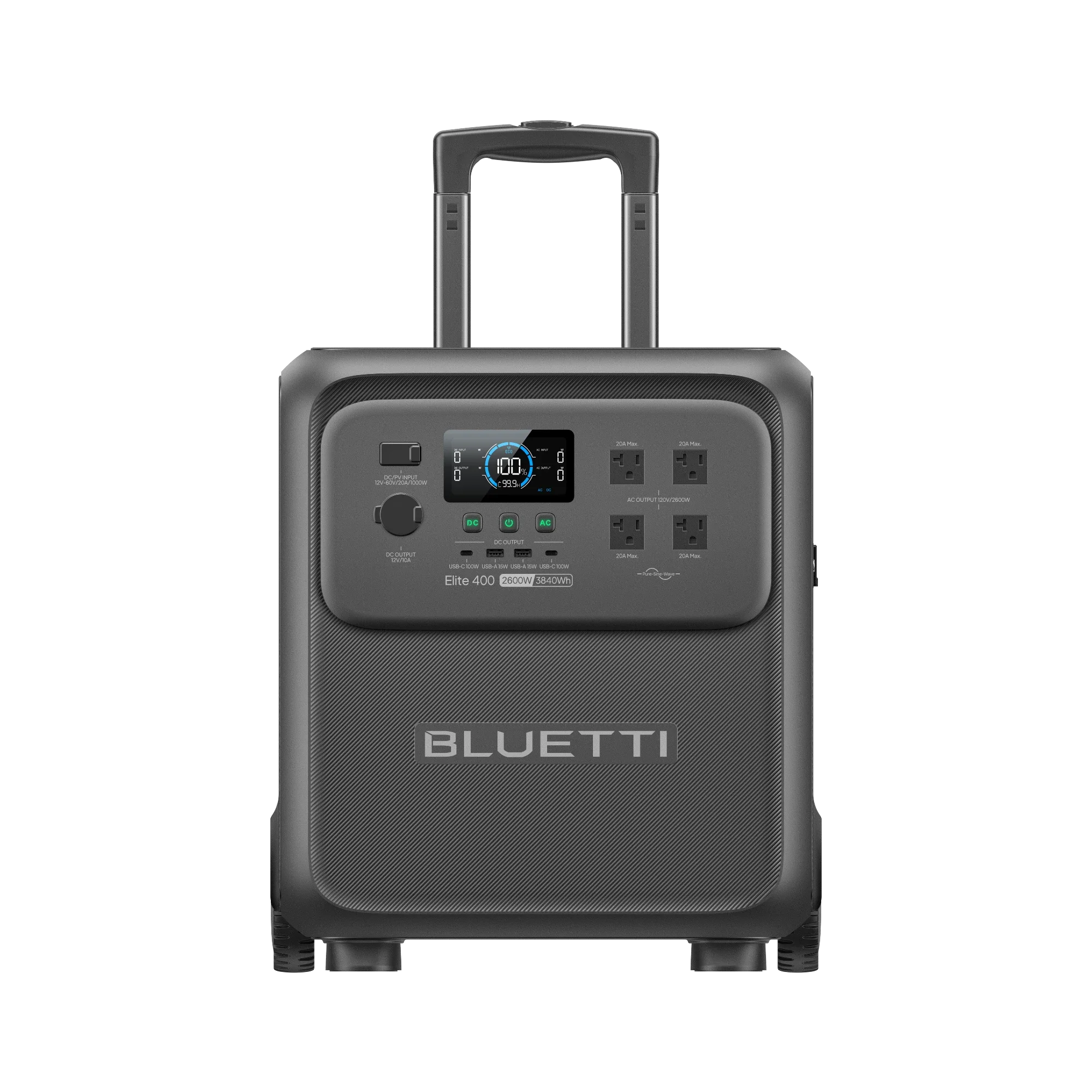
For more substantial backup needs, the Elite 400 is listed with 3,840Wh and 2,600W output. Those figures place it above the Elite 300 in stored energy and output, though selecting between them still depends on appliance requirements, run time and portability. The number alone cannot establish how long a refrigerator or other appliance will run: real duration changes with load, cycling behaviour and conversion losses.
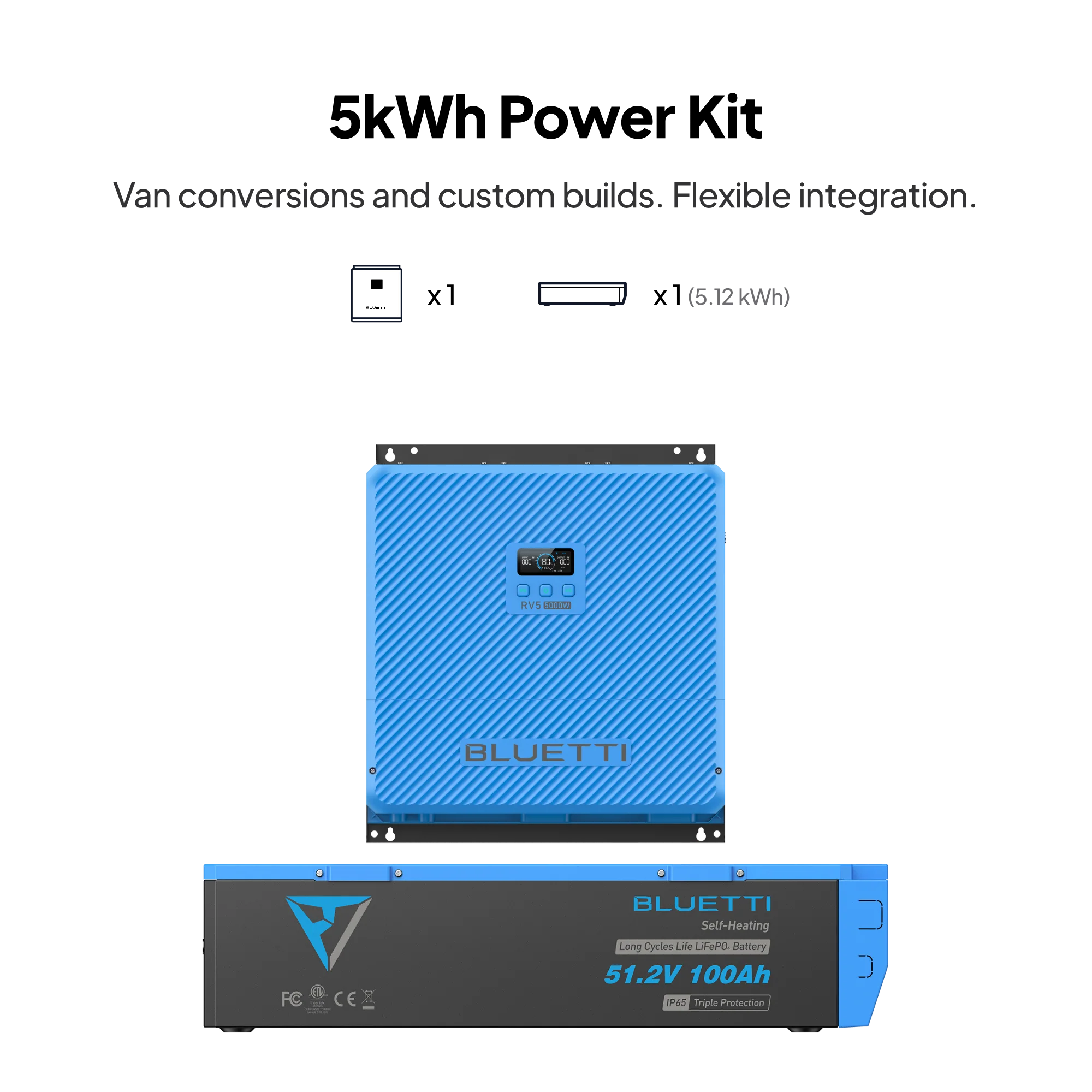
The lineup also reaches toward integrated setups. BLUETTI’s 5kWh Power Kit is presented for RV power systems, while the Apex 300 line supports an expandable approach to home and mobile energy. These are not simply bigger boxes. Installation, battery compatibility, charging equipment and the way power enters a home or vehicle become part of the decision. A reader comparing them should review the complete configuration rather than a headline spec.
- Choose a compact station when transport and modest loads come first.
- Look at middle-capacity portable models for mixed travel and household tasks.
- Consider an expandable setup when longer backup or system growth matters.
- Treat RV kits and home integration as complete-system decisions, not single-product purchases.
The focused idea behind FridgePower
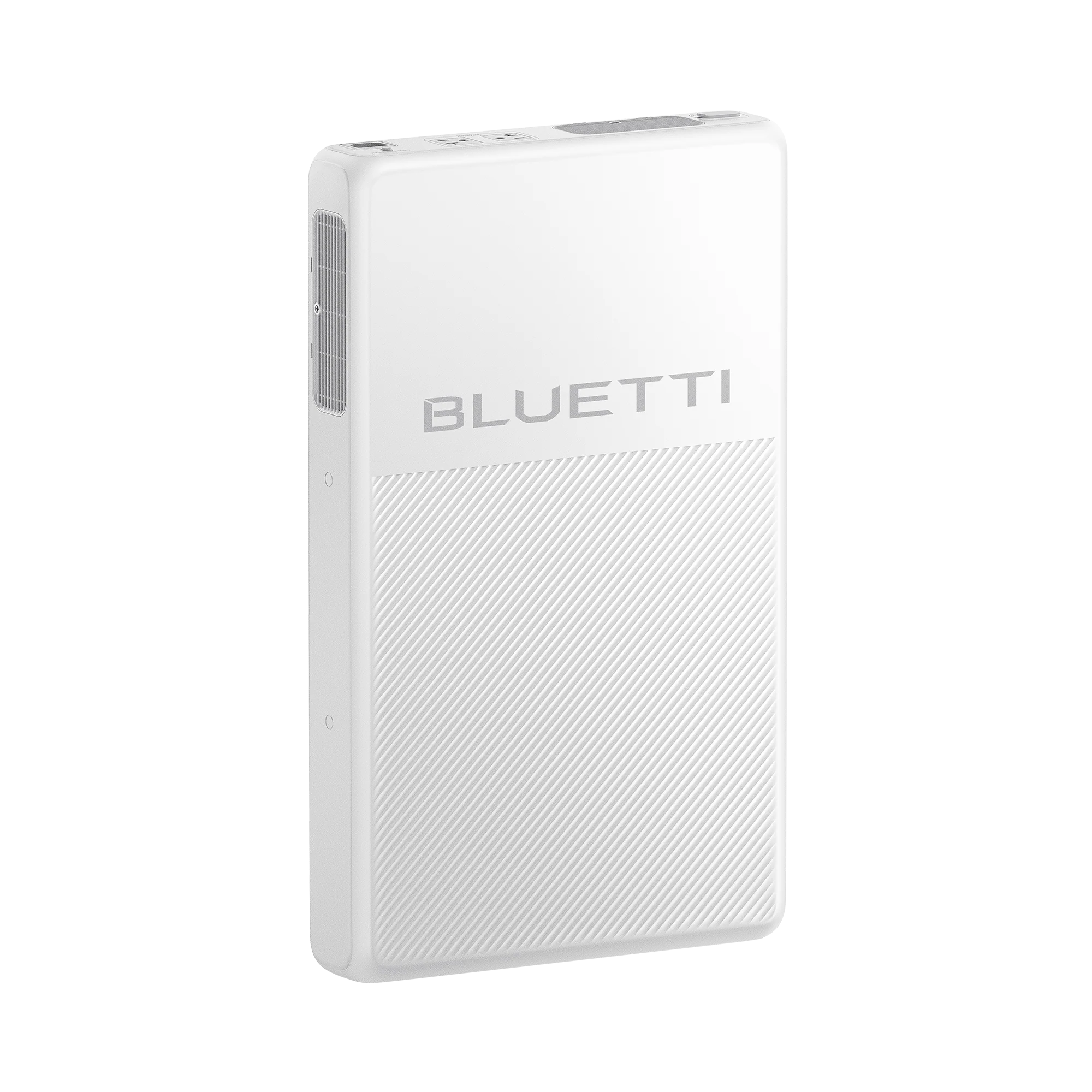
One of the clearest examples of BLUETTI’s range thinking is FridgePower. The Canadian product page presents it as a battery backup for a refrigerator, emphasizing a slim form and automatic response when power fails. Instead of asking a household to size a general-purpose station, this product centres one familiar priority: keeping cold storage running through an interruption.
That focus is useful, but it also defines the limit. A refrigerator backup does not automatically provide a whole-home solution, and shoppers should verify which refrigerator types and electrical setups are supported. Check installation instructions, transfer behaviour, compatible appliances and the stated runtime assumptions. As with any battery system, refrigerator age, ambient temperature, door openings and compressor cycles affect actual endurance.
For a household, the useful question is not whether outage protection sounds appealing. It is what must stay powered, for how long, and what will happen when that device draws power. BLUETTI’s range offers different routes into that question: dedicated appliance backup, mobile stations, solar charging and larger expandable systems. That is a meaningful brand proposition because people can enter the range at different scales, though they still need to check compatibility and installation detail.
What the brand’s structure says about its strengths
BLUETTI’s strongest editorial point is the range of use cases visible on the Canadian store. Camping, road trips, RV systems, home backup and solar charging each have dedicated pathways. Product pages pair capacity and output figures with scenario language, giving a reader a starting framework rather than presenting every model as universal.
There is also a visible ecosystem logic. A station can be paired with panels or expansion batteries, and some lines have chargers or RV-oriented components. This can make a setup more adaptable, but it raises the importance of checking system compatibility. A product name in the same family does not guarantee that every battery or accessory works with every generation.
To read the range without getting lost in model names, compare a few practical dimensions:
- Load: Can the inverter output handle the device or devices together?
- Runtime: Does the stored energy suit the hours you need?
- Recharging: Will wall, vehicle or solar charging fit your routine?
- Portability: Can the unit be moved and stored where it will be used?
- System scope: Is this a single station, an expandable kit or an installed backup?
Potential limitations are just as relevant. A wide portfolio can make model selection feel complicated, and capacities do not translate directly into guaranteed appliance runtimes. The price of a configuration is shaped by storage tier, panels, batteries and included accessories; readers should check the current Canadian listing for the exact bundle and its specifications. No general brand description can replace checking the requirements of a particular home, vehicle or appliance.
Where BLUETTI stands out
- Several product families address distinct settings, from portable use to home backup.
- Product pages publish key capacity and output figures for direct planning.
- Solar panels, expansion batteries and RV kits extend the range beyond standalone stations.
- FridgePower makes one household backup use case especially easy to identify.
Questions that deserve a closer look
- Verify that capacity and output both match the devices you want to run.
- Check included accessories, compatible expansion batteries and charging equipment.
- Treat advertised runtime as an estimate tied to stated test conditions and load.
- Confirm installation and appliance compatibility for dedicated backup or integrated systems.
Is BLUETTI a useful brand to know?
For someone exploring portable or backup power, BLUETTI is worth understanding because its Canadian range spans compact travel stations, higher-capacity units, RV-oriented kits and focused refrigerator backup. The brand’s practical value is in that choice of formats and its connected charging ecosystem, rather than a claim that one station suits every situation.
Our recommendation is to start with a real load list, then compare output, usable capacity, recharge methods and portability on the exact Canadian product pages. The main limitation is that system choice can become technical quickly, especially for home integration and expansion. Readers who want a simple portable source for modest devices have a clearer path; those planning critical household backup should verify the full setup carefully.
BLUETTI Brand Review: How Its Portable Power Range Fits Real Life
