



A concise introduction to DutchGrown’s family history, horticultural point of view and the range choices that matter when planning a UK garden.
Choosing bulbs online can feel like choosing from an endless catalogue. For a first-time reader, the useful questions are more basic: who is behind the name, what kind of plants does it sell, and how can a large range be narrowed to a garden that is actually yours?
DutchGrown™ is a family business whose story reaches back to nineteenth-century bulb growing in the Netherlands. Its UK site now brings together seasonal bulbs, collections and perennial plants, with variety pages that give practical planting details. We reviewed the brand’s published history and current UK product information for this introduction.
Some links in this article are affiliate links: if you make a purchase through them, we may receive a small commission.
Highlights
- The family history on the site traces back to 1882 and four generations.
- The UK store spans autumn-planted bulbs, spring-planted bulbs and bare-root perennials.
- Tulip Mara is a compact species tulip, listed at roughly 10-15 cm tall.
- Daffodil Peach Prince adds peach and cream tones, while the Tulip Zebra Collection offers striped tulips.
- Season, site conditions, pack choice and dispatch timing matter as much as flower colour.
A family history that still informs the business
The company account begins in 1882, when the family worked on a farm growing bulbs in the Netherlands and began selling them to local growers in Germany. The next generations continued the export business, and the story eventually crossed the Atlantic as the family built relationships with growers and customers in other markets. The current UK site presents the business as a continuation of that horticultural lineage, rather than a marketplace that simply lists anonymous garden products.
Today, the brand describes Ben as the flower-bulb specialist and grower-network contact, while Pete has focused on the technology and online side. That division is revealing: the catalogue pairs horticultural selection with a direct-to-consumer storefront. The site also says it exhibits at Keukenhof, and notes that much of its photography comes from the gardens there. Read the company story and brand background alongside the UK flower-bulb range for that context; the family history adds useful background. Those details provide context for its visual emphasis on named cultivars and seasonal displays.
Heritage alone cannot tell a gardener whether a variety fits a shaded border or a dry container. What matters is whether it helps readers find clear information and a selection broad enough to make a planting plan. DutchGrown’s product pages typically include planting season, preferred position, bulb spacing and height, while its quality and grow-guarantee pages describe the company’s standards and customer commitment. Readers should still check the terms on those pages before ordering.
- Grower heritage: the company describes a family history rooted in bulb cultivation and export.
- Named varieties: individual listings identify cultivars instead of treating every bulb as interchangeable.
- Practical detail: product pages often spell out season, aspect and planting depth.
- Seasonal breadth: autumn and spring planting categories give the shop more than one buying window.
A catalogue organised around planting plans
The UK shop is structured by flower type, planting season and curated collections. The store’s categories cover tulips, daffodils, alliums, crocuses, hyacinths, anemones and many other autumn-planted bulbs. Start with tulips, daffodils, or allium bulbs if you already know the flower group. Separate sections cover spring-planted bulbs and plants, including dahlias and bare-root perennials; gardeners can also compare bare-root perennials with bulbs.
For a novice, collections can reduce the work of pairing varieties. They offer less research upfront than building a mix from scratch. A single-cultivar listing gives more control over colour and form, while mixed collections are useful when the goal is a coordinated display without researching every pairing. The trade-off is choice: the range can be broad enough that shoppers need to filter by flowering time, height, position and soil moisture. Product photography is a starting point, not a substitute for reading the planting notes.
One useful reading habit is to treat the listed height and season as planning inputs. A low-growing variety may disappear behind vigorous neighbours; a bulb that prefers moist ground may struggle in a hot, free-draining pot. For repeat displays, account for the local climate and whether the plant is perennial or treated as seasonal. The site gives a base specification, but garden conditions determine the result. Recheck planting depth, flowering season and preferred position before settling on a variety.
Three listings that make the range easier to picture
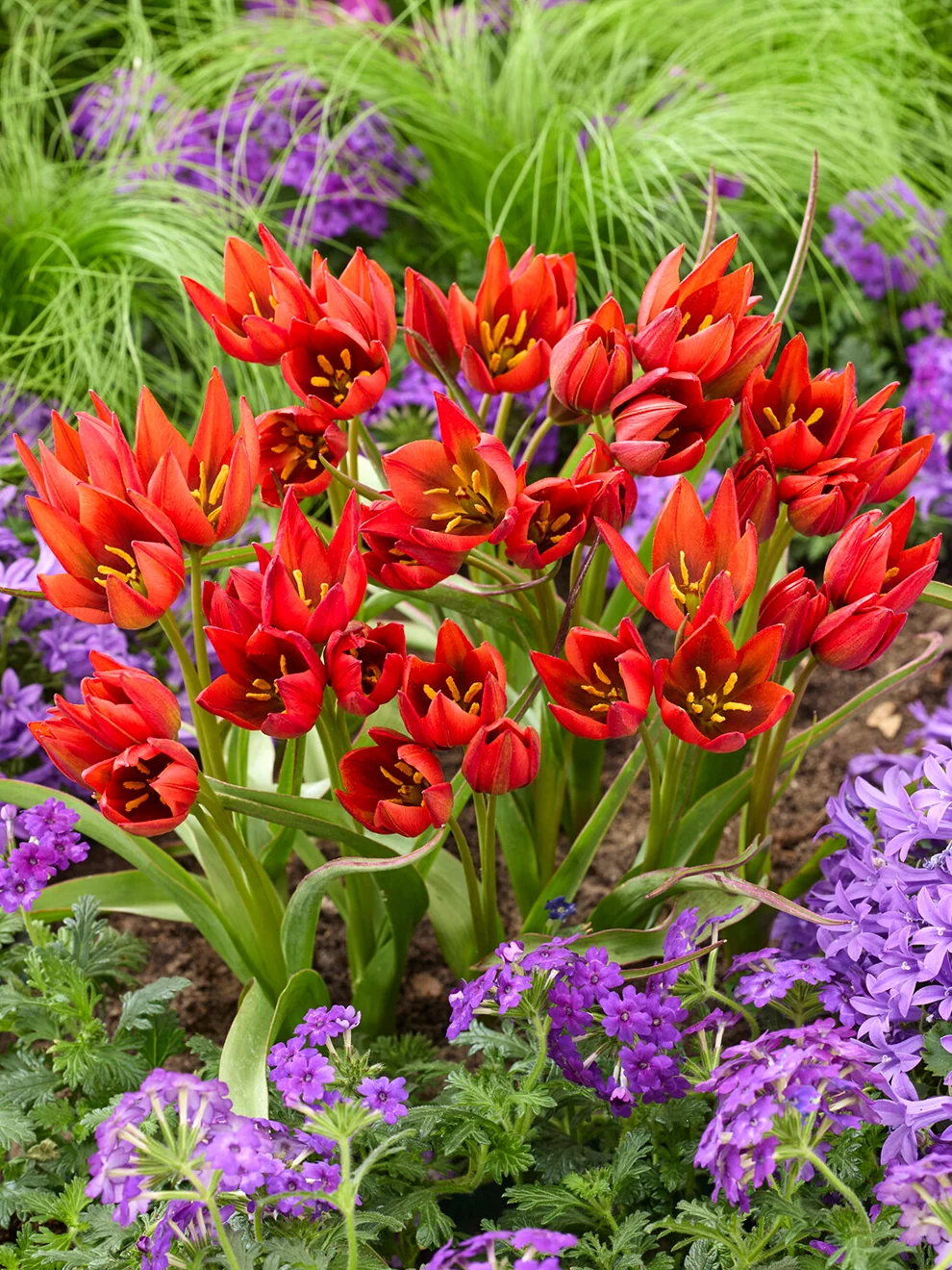
Tulip Mara is a useful example of a smaller-scale offering. The UK product page describes it as a miniature species tulip with red-orange, star-shaped flowers and green streaking on the outer petals. Its listed height of about 10-15 cm makes it more plausible for a rock garden, container edge or the front of a sunny border than for a tall, formal display. The listing recommends autumn planting and sun or partial shade. Check the live page for pack formats and current availability through Tulip Mara’s product page. The listing for this miniature tulip is a useful starting point for smaller spaces.
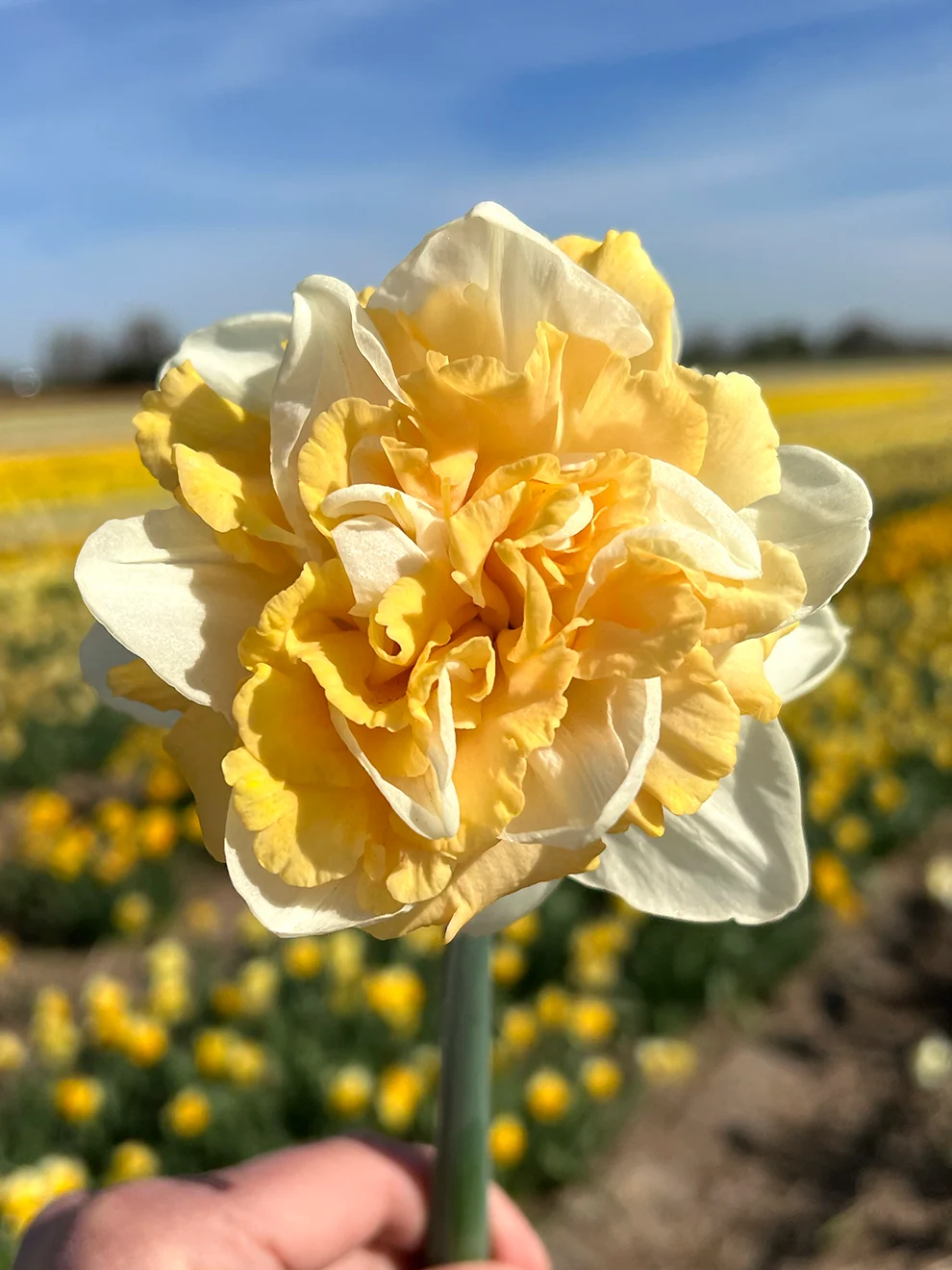
Daffodil Peach Prince represents a different role: a named daffodil with peach and cream colouring for gardeners who want a gentler palette than the classic all-yellow display. As with any daffodil choice, read the current page for flowering timing, height and planting guidance, then decide whether its colour works with nearby spring bulbs. You can see the product details on Daffodil Peach Prince. The named daffodil listing helps compare its palette with neighbouring spring flowers.
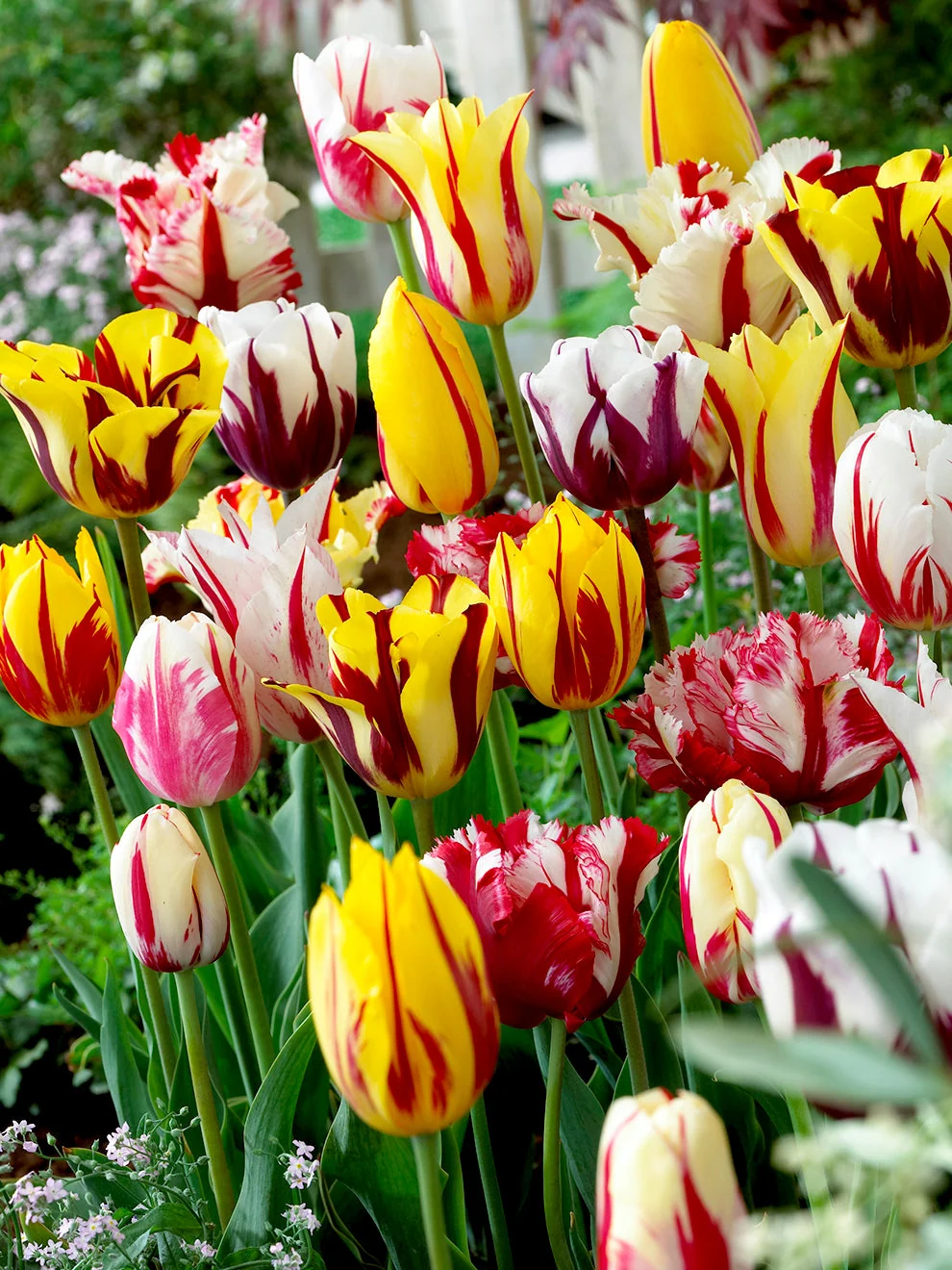
Tulip Zebra Collection is a collection rather than a single cultivar, which makes it relevant to readers who want a patterned tulip display without assembling a mix one variety at a time. Striped petals create a more graphic effect, so the collection is likely to work best where surrounding planting leaves enough visual breathing room. Check what is included and the current pack options on the Tulip Zebra Collection page before deciding. Its striped tulip mix gives a different effect from single-colour rows.
What a first order asks you to consider
The brand is a stronger fit for a gardener willing to plan ahead than for someone looking for an instant, fully grown plant. Begin with seasonal planting information and quality details before browsing varieties. Bulbs are living stock tied to seasonal dispatch and planting windows, with availability varying by season. The UK shop’s seasonal schedule explains when different groups are sent; timing can vary by product type and availability, so verify the details on the product and shipping pages before placing an order.
Cost is shaped by the variety, bulb size, number in a pack and whether a listing is a curated collection. We are not quoting amounts because stock and listings change. Use the product page to compare pack choices and confirm the current price, then consider how many bulbs are needed for the visual effect you want. A handful of statement bulbs and a dense naturalised drift are different projects with different quantities.
For a practical shortlist, work through these questions before adding anything to a basket:
- Is the product for autumn or spring planting, and does its dispatch window work for your plan?
- How much sun does the chosen bed or container receive?
- Will the listed height sit comfortably beside existing plants?
- Does the soil stay moist enough for the variety, or will a container give you more control?
- Do you want one repeated cultivar or a ready-made mix with a broader effect?
Where DutchGrown stands out, and where to pause
In our view, the brand’s clearest strength is the connection between a defined family story and a broad, named horticultural range. Gardeners can move from a history and quality explanation to product pages with recognizable specifications, then browse by flower group or season. That context is useful for people who enjoy planning and want several kinds of bulbs and perennials from one specialist shop.
The main limitation is the same thing that makes the range appealing: the quantity of choice and the time comparison takes. New gardeners may need to do extra work to compare many similar cultivars, and flower photography cannot guarantee the precise scale or colour in a particular garden. Availability is seasonal, and the best planting choice still depends on local conditions. The site is a resource, not a substitute for matching its notes to your own soil and exposure.
The detail that rewards a closer look
- A long-running family identity gives the catalogue a clear point of view.
- Many listings offer concrete planting information alongside cultivar names.
- Seasonal groups and collections help readers build a scheme across plant types.
The planning work still belongs to the gardener
- A wide range can make comparison slow if colour is the only filter.
- Dispatch and planting times depend on season and product group.
- Garden performance depends on aspect, drainage, moisture and care after planting.

Is DutchGrown™ a useful place to start a bulb plan?
For UK gardeners who want named varieties, seasonal choice and a specialist’s range in one catalogue, DutchGrown™ is worth exploring. The strongest way in is to begin with a garden problem – a container that needs spring colour, a damp bed, or a border that needs a later focal point – and then use each product’s planting notes to narrow the options. Tulip Mara, Daffodil Peach Prince and the Tulip Zebra Collection show how varied the scale and style can be.
One honest caveat: a catalogue cannot make the horticultural decision for you. Check the current availability, pack details, dispatch schedule and growing requirements, especially if your site has unusual light or soil. If you are comfortable planning around the planting season, the brand’s range and background make it a relevant starting point; if you want immediate colour, look for established plants locally instead.
DutchGrown™ Brand Guide: A Family Bulb Story and What Its Range Offers
