

Use the cooling problem, vehicle details and installation space to narrow AlloyWorks parts before checking a listing’s full fitment notes.
Shopping for a cooling component is easiest when the symptom and the part are kept separate. A radiator, an intercooler and a transmission cooling upgrade all move heat, but they serve different systems. Choosing by a familiar vehicle name alone can still lead to a mismatch.
We reviewed the US AlloyWorks store’s product information to map out a practical selection process. The product pages name distinct vehicle and transmission applications, which makes them useful starting points; the decisive details are still the exact model, engine, dimensions and connection layout on the listing.
Some links in this article are affiliate links: if you make a purchase through them, we may receive a small commission.
Highlights
- Start with the system that needs attention: engine cooling, charge-air cooling or transmission temperature management.
- The Alloyworks 4 Rows Aluminum Radiator with Shroud Fan is listed for 1988-1997 Chevy/GMC C/K pickups.
- The Front Mount Intercooler names a 2007-2012 BMW Mini Cooper S R56/R57 hatchback and 1.6L engine.
- The SureCool STL010 page lists four transmission families, so confirm the exact unit before selecting it.
- Treat the listing’s dimensions, ports, included parts, warranty and return terms as required checks, not optional details.
Begin with the part’s job
Write down what the replacement is expected to do before opening the catalog. A radiator addresses engine coolant heat exchange. An intercooler handles charge air on a turbocharged application. A transmission cooling kit has a different circuit and fitment logic. The store groups products across radiators, intercoolers, oil coolers, heater cores and other components, so its breadth is useful only after the system is identified. Start with the correct cooling circuit.
- Radiator: confirm the engine-coolant application, core measurements and hose locations.
- Intercooler: confirm the engine and chassis, then check charge-pipe routing and front-end clearance.
- Transmission cooling upgrade: identify the transmission family and confirm line fittings and installation layout.
Make a short note of the symptom, the component currently installed and whether the repair is an original-equipment replacement or a change to the setup. If a mechanic has diagnosed the issue, use the component name from that diagnosis. If not, confirm the source of the temperature problem before buying: a cooling part cannot correct unrelated airflow, sensor or engine issues.
Then collect the vehicle identity from its registration or service records: year, make, model, trim, engine size and transmission where relevant. Older vehicles can have production-year overlaps and midyear changes. A product title that appears close should prompt a closer check, not an assumption.
Match the application before comparing construction
1. The four-row C/K radiator – check package and clearance
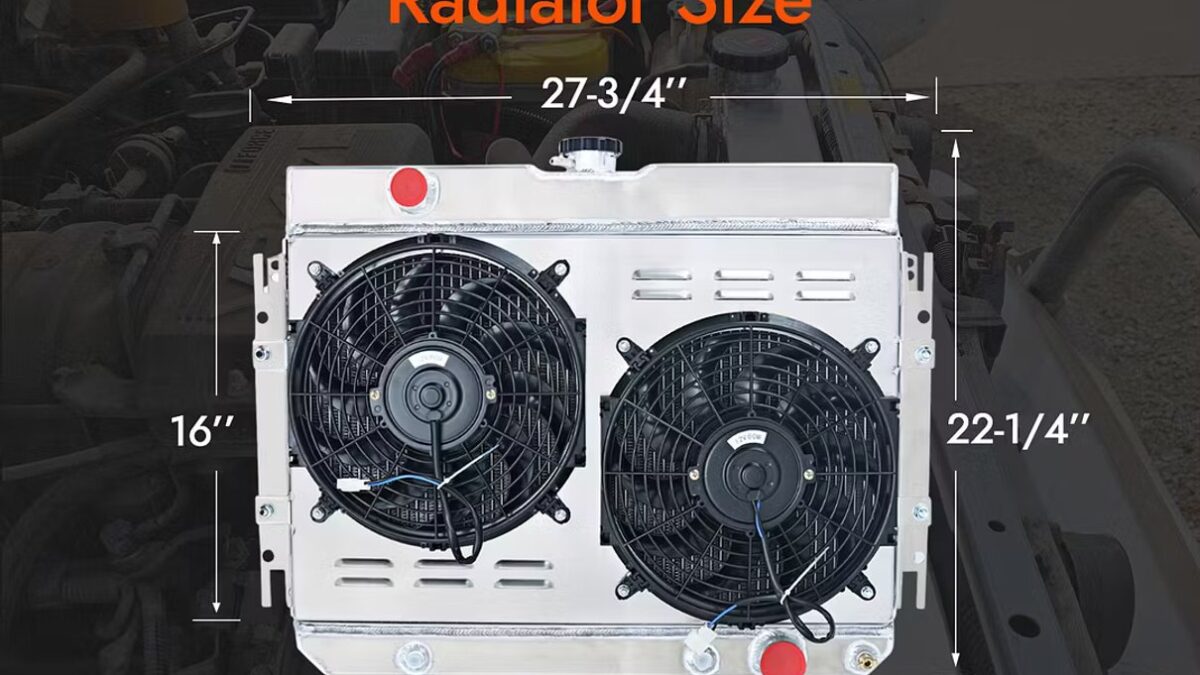
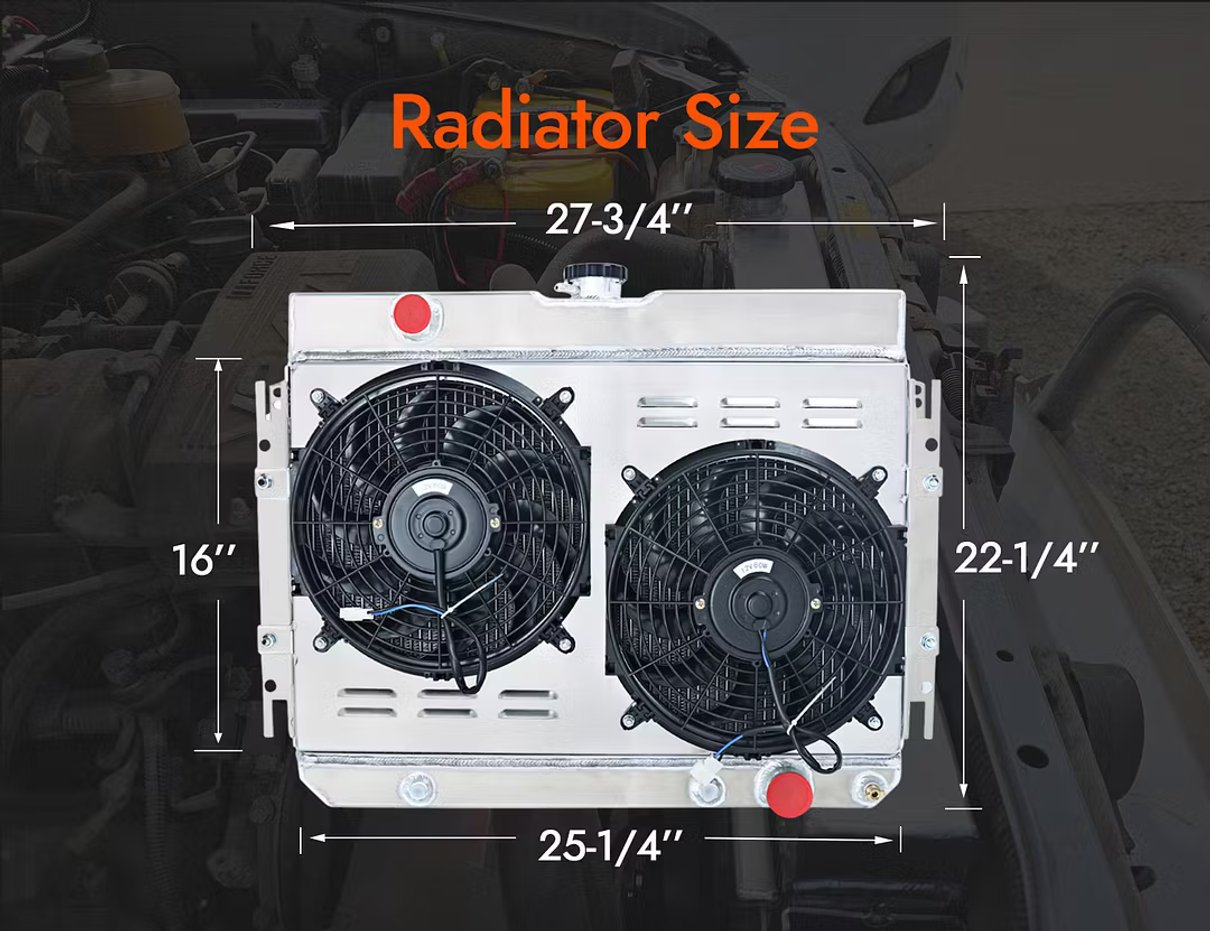
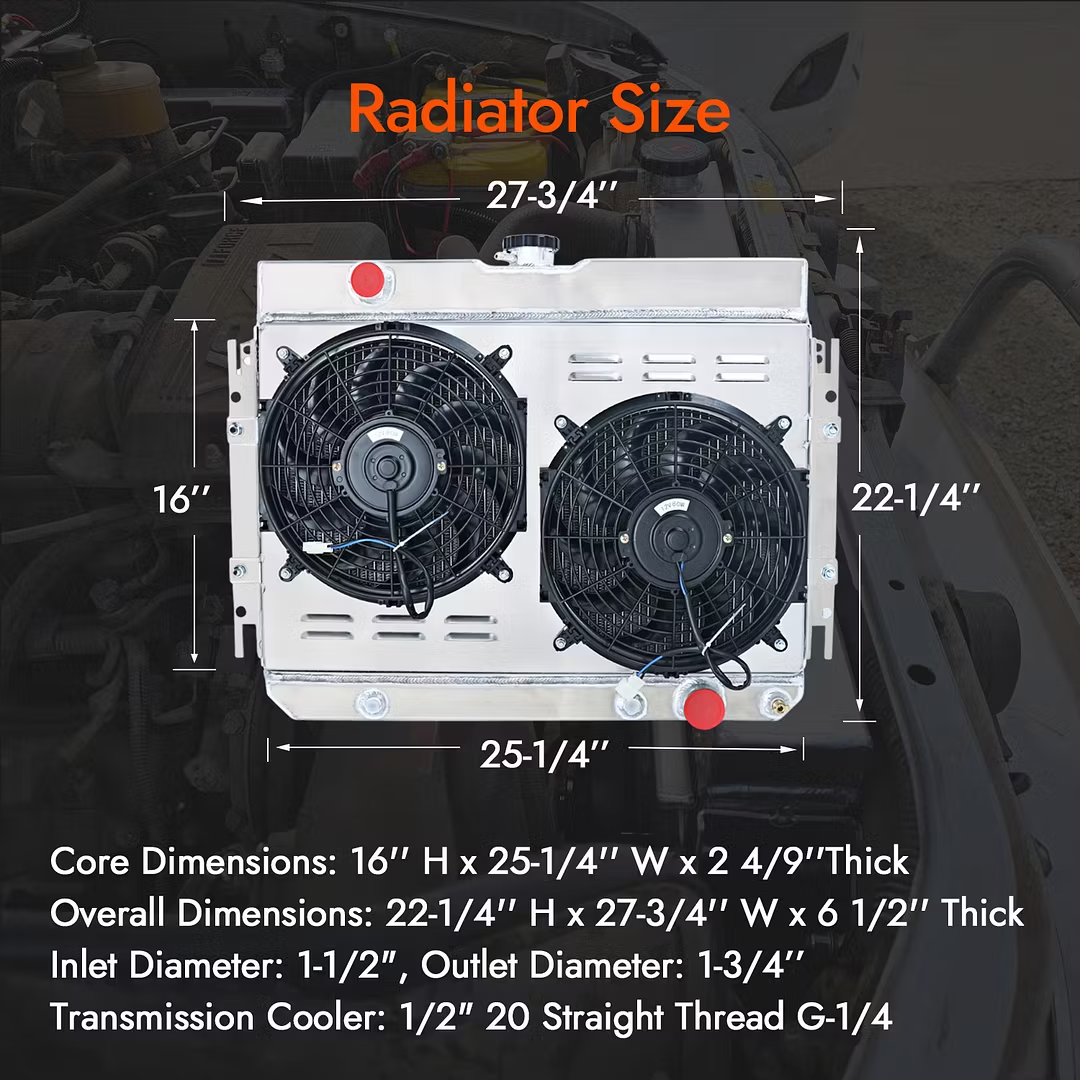
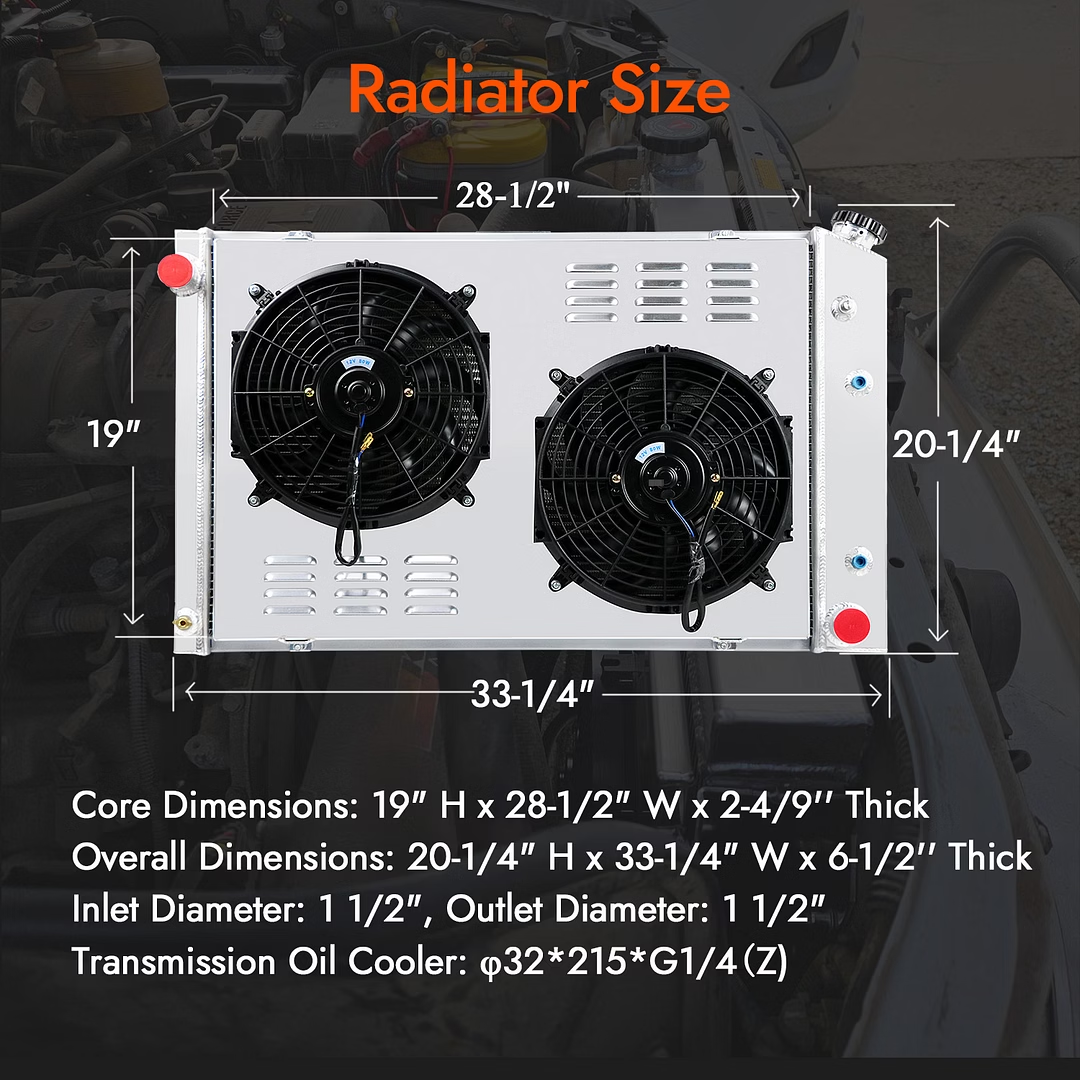
Use the product title as a filter, then read the complete product details. The Alloyworks 4 Rows Aluminum Radiator with Shroud Fan is specifically named for 1988-1997 Chevy/GMC C/K 1500-3500 applications. That is a more useful starting point than a generic “truck radiator” label, but a buyer should still verify their exact C/K configuration and any engine or chassis distinctions shown on the page.
The title also identifies a four-row aluminum radiator and a shroud fan package. Those words describe the listing’s configuration; they do not prove that the assembly will fit every truck in the date range or clear every aftermarket accessory. Verify mounting clearance. Review the radiator application page beside your vehicle records, and revisit its listed package details before comparing parts. Check dimensions, mounting locations, hose connections, fan electrical requirements and the parts actually included. The four-row radiator listing should be checked for its mounting and connection details against the vehicle. Compare those against the original unit or installation plan before choosing.
2. The Mini Cooper S intercooler – confirm chassis and pipe routing
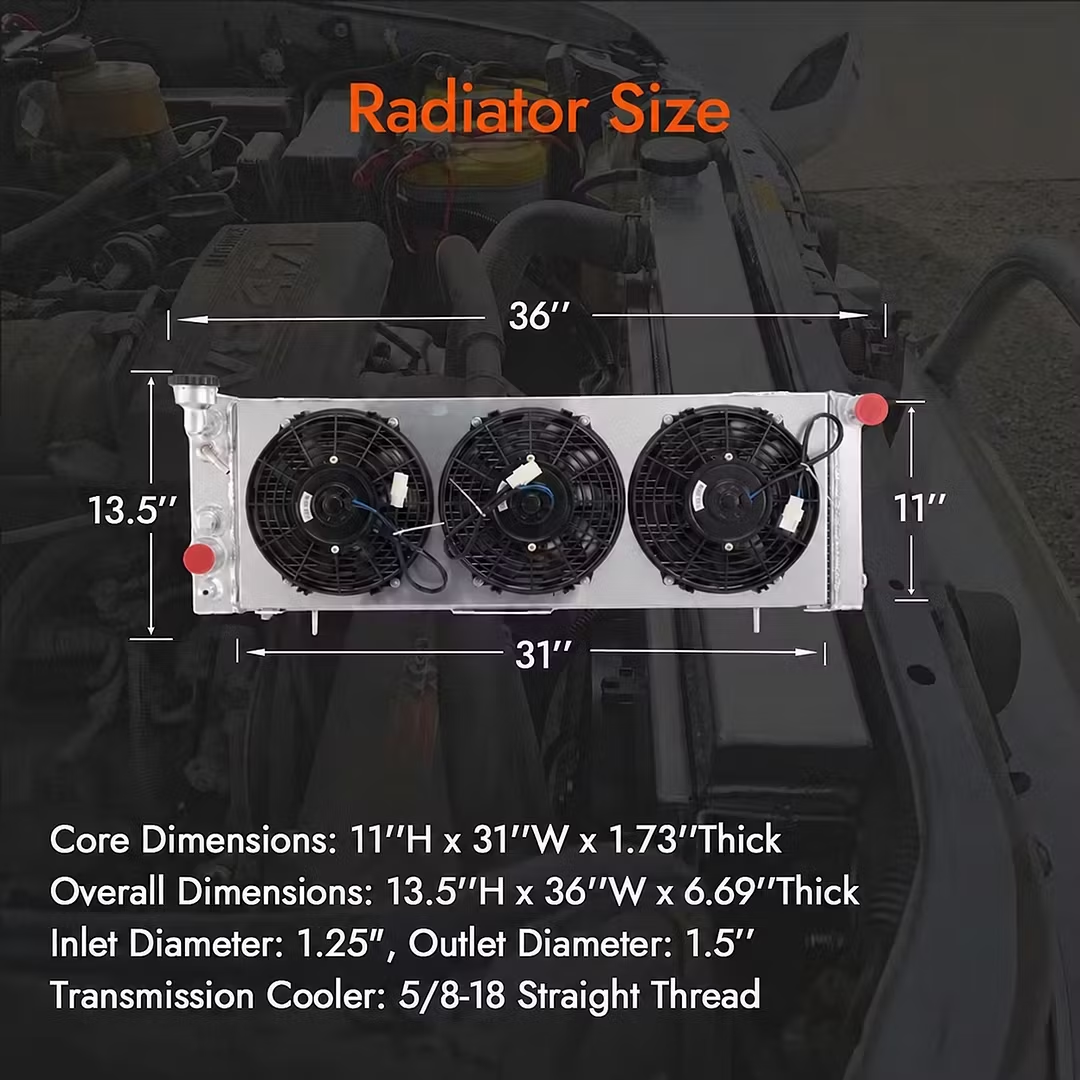
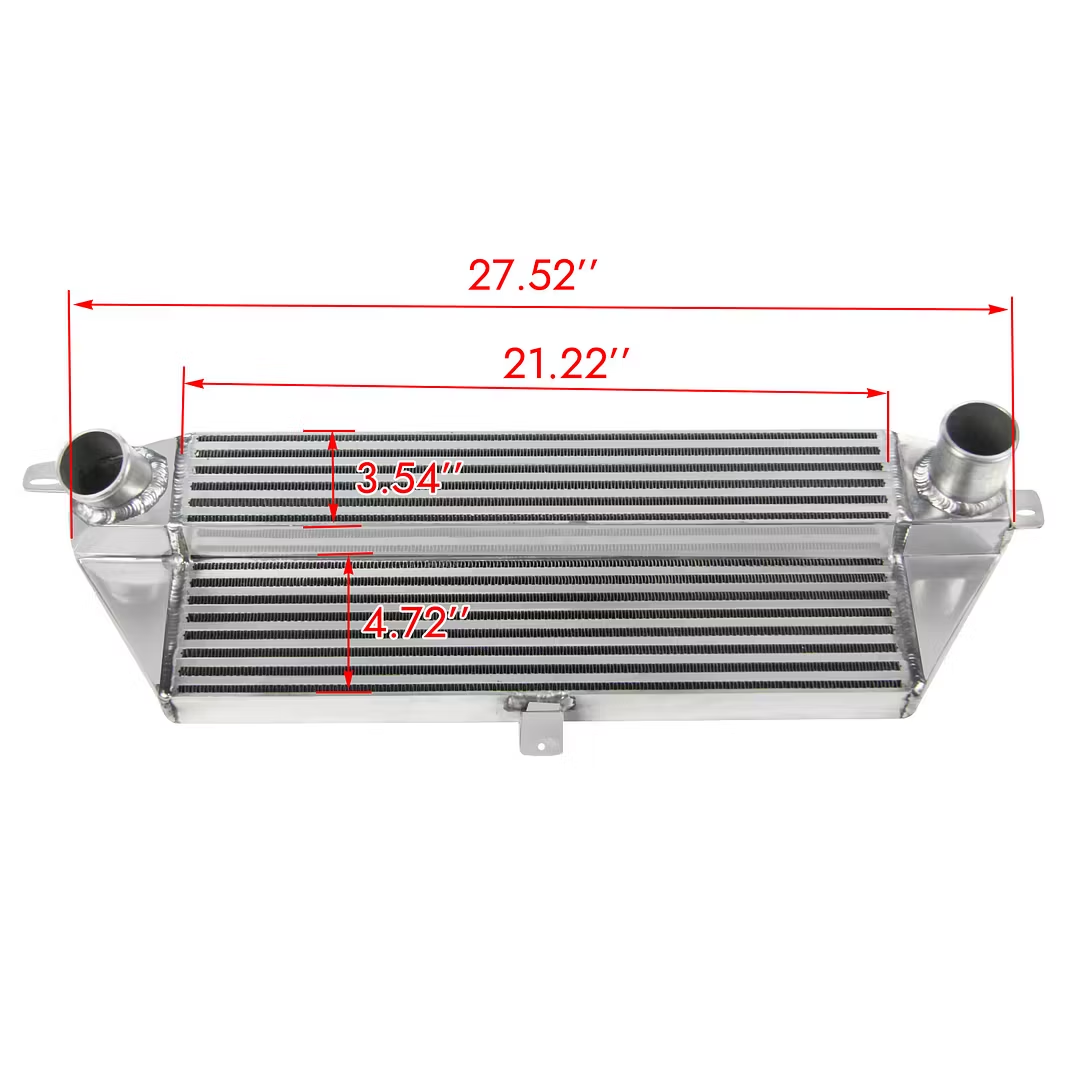
For an air-to-air charge cooling job, the Mini Cooper S front mount intercooler narrows the application to a specific Mini generation and engine. Confirm whether the car is an R56 or R57, the engine specification and the space available behind the bumper. A front mount part may involve pipe routing and fitment constraints that a radiator replacement does not. Allow for pipe routing. Check the Mini intercooler page for application details and confirm the vehicle’s R56 or R57 designation.
3. SureCool STL010 – identify the transmission family
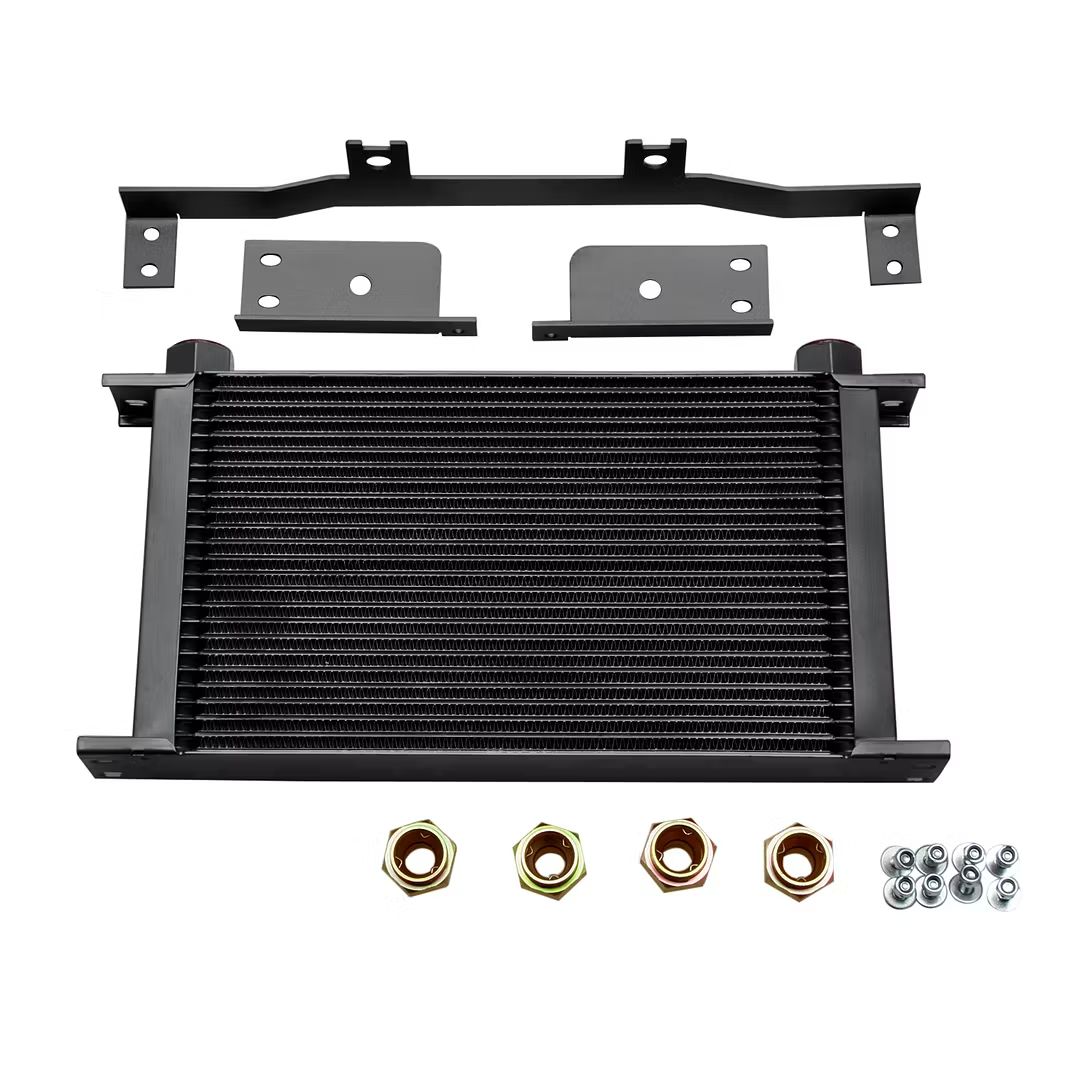
For transmission heat management, the Alloyworks SureCool STL010 cooling system upgrade lists 6L80, 6L90, 8L90 and 10L90 transmission families and 2014-up in its title. Confirm the transmission code, vehicle year and whether the listing’s stated application matches the particular build. Similar names do not guarantee the same fittings or installation path. Read the SureCool product listing for its transmission-family notes and compare the page with your transmission identification.
| Part | Listed application | Best starting point | Confirm before choosing |
|---|---|---|---|
| 4-row radiator and shroud fan | 1988-1997 Chevy/GMC C/K 1500-3500 | Engine-cooling replacement | Dimensions, engine, ports and fan setup |
| Mini Cooper S front mount intercooler | 2007-2012 BMW Mini Cooper S R56/R57 1.6L | Charge-air cooling | Chassis, engine and pipe routing |
| SureCool STL010 upgrade | 6L80, 6L90, 8L90, 10L90; 2014-up in title | Transmission cooling | Transmission code, fittings and layout |
Best starting point by repair
- For an engine-cooling replacement on a listed C/K truck, start with the four-row radiator and shroud fan, then compare dimensions and package details.
- For charge-air cooling on the named Mini Cooper S application, review the front mount intercooler and confirm chassis and pipe routing.
- For a transmission cooling upgrade, check whether your unit is one of the families named for SureCool STL010 and verify the fittings.
Compare the details that affect installation
Once you have two or three plausible listings, compare the details that determine whether the part can be installed. A longer list of features does not help if the inlet is on the wrong side or the assembly conflicts with the vehicle’s configuration. Product photos can help identify package contents and shape, but written specifications should settle dimensions and compatibility.
- Dimensions: compare overall height, width, thickness and core size with the vehicle space and existing part.
- Connections: check inlet and outlet placement, hose diameter, ports and any transmission line fittings.
- Included components: note whether a shroud, fan, brackets, hoses or installation hardware are included in that listing.
- Vehicle qualifiers: read year, engine, trim, transmission and chassis notes together rather than relying on one matching field.
- Installation needs: check whether the job requires additional parts, wiring, coolant, tools or professional labor.
A listing can state a broad year range and still contain qualifiers in its full fitment details. Compare all fitment fields. Compare the page with a parts catalog, the original part number or a technician’s recommendation if your vehicle has been modified. If a dimension or connection is unclear, ask the store before ordering and keep the answer with your records.
Review the store terms and cost drivers
The US store states dispatch from US warehouses within one to two days, delivery in three to seven days, a 60-day return period and a one-year warranty. Those are store-level statements, not a guarantee about the handling of every order or a substitute for the terms attached to a specific product. Review the current shipping, return and warranty pages before placing an order, especially if installation timing matters.
Rather than comparing parts on a headline price alone, account for the factors that drive the total job cost: component size and construction, a fan or shroud package, extra pipes or fittings, shipping, and any labor or coolant needed. Check the current product page for its price and any shipping information because catalog details can change. This guide does not assign a price to these products.
Keep a record of the exact product page and application details you checked. If the part is going into a modified vehicle, confirm compatibility with the relevant modifications, such as an alternate engine, transmission, turbo setup or front-end arrangement. Fitment confidence comes from matching several details together, not from the brand name alone.
A quick selection sequence
- Identify which system and component the repair concerns.
- Record the exact vehicle, engine and transmission details, including generation or chassis code.
- Filter to listings that name that application, then compare dimensions and connections.
- Check what arrives in the package and what else the installation requires.
- Review current price, shipping, return and warranty information on the exact store pages.
This sequence helps prevent two common errors: selecting a component because the title shares a vehicle name, and overlooking installation differences between apparently similar products. For a part that affects cooling or transmission operation, a technician’s confirmation is sensible whenever fitment remains uncertain.
Fitment questions before ordering
How should I confirm fitment? Match the year, model, engine, chassis and transmission fields on the exact listing to the vehicle records. Check measurements and ports against the original part; ask the store or a technician if a qualifier is unclear.
Does the listing include every installation part? The radiator title names a shroud fan, but package contents should be verified on the product page. Check whether hoses, wiring, brackets or other hardware are needed separately for your installation.
Where can I check current returns and warranty terms? Review the store’s current support pages and the product listing. The US store states a 60-day return period and one-year warranty; confirm how those terms apply to the item and order.
Where AlloyWorks makes the choice easier
- The catalog spans several cooling categories, helping readers start from a component type.
- Some titles give specific year, model, engine or transmission families to narrow the search.
- The radiator example identifies an aluminum, four-row configuration and a shroud fan.
- The store states US warehouse dispatch, a return window and a warranty on its support pages.
Details that still need a close read
- A title’s application range may not capture every trim, engine or chassis exception.
- Dimensions and connection placement must be compared with the vehicle and existing component.
- Package contents and any required additional hardware should be confirmed on the exact listing.
- Store-level shipping, return and warranty statements should be checked against current terms.
Is AlloyWorks a sensible shortlist for your cooling repair?
Shanghai Ting Yue Auto Parts Co., Ltd presents a broad parts catalog through AlloyWorks, and the specific listings can help owners narrow a radiator, intercooler or transmission cooling search by application. We would shortlist a product when its stated vehicle details and measurements match the repair in hand, then confirm the included components and current terms.
The limitation is that a category page or title alone cannot confirm a vehicle’s complete configuration. Treat the exact fitment match as essential. If any engine, transmission, dimension or connection detail is uncertain, verify it with the seller or a qualified technician before ordering. Check the exact product page for current availability and specifications.
